
Smart home ideas that feel invisible are becoming increasingly important in 2026 as homeowners seek the benefits of technology without visual clutter, constant interaction, or learning curves. Early smart homes often emphasized visibility-screens, panels, voice commands, and flashing indicators. Today, the trend has shifted toward subtlety. Technology is expected to work quietly in the background, supporting comfort, efficiency, and security without demanding attention.
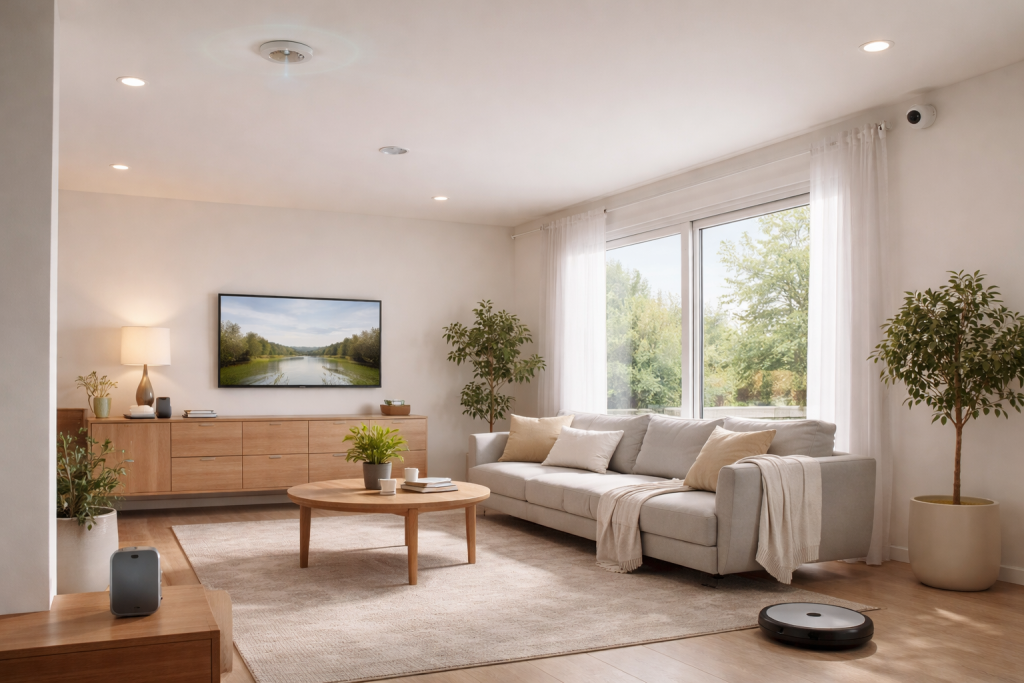
Rather than showcasing devices, modern smart homes prioritize seamless integration. Smart home ideas that feel invisible focus on reducing friction, automating routine tasks, and aligning with daily habits so that technology enhances life without becoming the focus of it.
Why Invisible Smart Homes Are Gaining Popularity
As homes incorporate more technology, complexity can increase quickly. Many homeowners have experienced frustration with fragmented systems, constant notifications, or devices that interrupt rather than assist.
Several factors are driving the move toward invisibility:
- Desire for calmer, less cluttered living spaces
- Fatigue from managing multiple apps and devices
- Increased focus on emotional comfort and simplicity
- Expectation that technology should adapt to people, not the reverse
Smart home ideas that feel invisible respond by minimizing interaction while maximizing usefulness.
Defining “Invisible” Smart Home Design
Invisible does not mean hidden in a literal sense. It means that technology blends into the environment and routines naturally.
Invisible smart homes typically feature:
- Automation based on behavior rather than commands
- Devices integrated into existing fixtures
- Minimal visual indicators
- Reduced need for manual control
Smart home ideas that feel invisible work quietly, responding to context rather than constant instruction.
Lighting That Adjusts Without Notice
Lighting is one of the most effective areas for invisible smart design.
Circadian-Aware Lighting
Lighting systems can adjust brightness and color temperature throughout the day to support natural rhythms.
These adjustments happen gradually, often without occupants noticing the change.
Smart home ideas that feel invisible use light to support comfort rather than draw attention.
Motion and Presence-Based Control
Lights that respond to presence rather than switches reduce friction.
When tuned carefully, motion sensors activate lighting smoothly without false triggers or abrupt changes.
Climate Control That Learns Behavior
Heating and cooling systems have become more adaptive.
Predictive Temperature Adjustments
Modern climate systems learn daily patterns and adjust automatically.
This supports comfort while reducing energy use.
Smart home ideas that feel invisible eliminate the need for frequent manual adjustments.
Zonal Comfort Without Interfaces
Instead of managing temperatures room by room through apps, zoned systems adjust based on occupancy and usage patterns.
Comfort improves without added complexity.
Sound and Audio Integration Without Visual Clutter
Audio technology is increasingly integrated rather than displayed.
Built-In and Architectural Audio
Speakers integrated into ceilings or walls provide ambient sound without visible hardware.
This preserves visual simplicity while supporting music, alerts, or communication.
Smart home ideas that feel invisible prioritize sound quality without equipment presence.
Context-Aware Audio Levels
Volume adjustments based on time of day or activity prevent disruption.
This supports calm environments without manual control.
Smart Security That Works in the Background
Security is most effective when it does not interrupt daily life.
Passive Monitoring Systems
Modern security systems rely more on passive sensing and pattern recognition.
Rather than frequent alerts, they notify only when behavior deviates from normal patterns.
Smart home ideas that feel invisible improve safety without creating anxiety.
Seamless Access Control
Smart locks and entry systems allow access without visible interaction, using proximity or schedule-based permissions.
This reduces friction while maintaining security.
Environmental Monitoring Without Dashboards
Smart homes can monitor air quality, humidity, and noise quietly.
Automatic Adjustments Based on Conditions
Instead of displaying data constantly, systems respond automatically.
For example:
- Increasing ventilation when air quality drops
- Adjusting humidity for comfort
- Reducing noise through smart window systems
Smart home ideas that feel invisible prioritize action over information display.
Alerts Only When Needed
When thresholds are crossed, notifications are sent selectively.
This avoids constant monitoring fatigue.
Kitchens That Anticipate Rather Than Interrupt
The kitchen is becoming a subtle smart environment.
Appliance Coordination
Appliances communicate behind the scenes to optimize energy use and timing.
This improves efficiency without user involvement.
Smart home ideas that feel invisible support daily routines without changing how people cook or clean.
Smart Storage Without Screens
Sensors can track inventory or freshness without adding visible displays.
Information is accessed only when needed.
Bathrooms Designed for Subtle Automation
Bathrooms benefit from automation that supports comfort quietly.
Touchless Systems
Touchless faucets, lighting, and ventilation reduce friction and improve hygiene.
These features operate automatically, blending into routine use.
Smart home ideas that feel invisible enhance comfort without changing behavior.
Adaptive Environmental Controls
Temperature, lighting, and ventilation adjust based on time of day and occupancy.
This supports relaxation without manual input.
Furniture and Architecture as Technology Hosts
Invisible smart homes integrate technology into structure.
Embedded Sensors and Controls
Sensors embedded in walls, floors, or furniture remove the need for visible devices.
This preserves aesthetic simplicity.
Smart home ideas that feel invisible use architecture itself as the interface.
Multi-Function Design Elements
Design elements serve both aesthetic and technological functions.
This reduces duplication and visual noise.
Automation Based on Routines, Not Commands
Voice assistants are giving way to routine-based automation.
Predictable Patterns Over Voice Interaction
Systems respond to schedules, presence, and learned behavior rather than spoken commands.
This reduces disruption and reliance on vocal interaction.
Smart home ideas support autonomy without constant prompts.
Manual Control as Backup
Invisible systems still allow manual control when needed, but it is secondary rather than primary.
This balance improves trust.
Reducing App Dependency
Too many apps undermine invisibility.
Unified Control Platforms
Homes increasingly rely on unified platforms that manage systems behind the scenes.
This reduces cognitive load.
Smart home ideas that feel invisible minimize user-facing interfaces.
Setup Once, Then Forget
After initial configuration, systems operate independently.
This aligns with the goal of technology that disappears into daily life.
Emotional and Psychological Benefits
Invisible technology supports emotional well-being.
Reduced Cognitive Load
When homes manage routine tasks quietly, mental energy is freed for more meaningful activities.
Smart home ideas reduce decision fatigue.
Increased Sense of Calm
Fewer visible devices and alerts contribute to calmer environments.
This supports focus and recovery.
Sustainability Through Quiet Optimization
Invisible systems often improve efficiency.
Energy Use Optimization
Automated systems adjust usage based on real conditions rather than fixed schedules.
This reduces waste without user effort.
Smart home ideas align sustainability with convenience.
Longevity Over Novelty
Invisible systems age better than flashy interfaces.
This supports long-term value.
Challenges of Invisible Smart Homes
Invisible systems require thoughtful design.
Potential challenges include:
- Over-automation reducing perceived control
- Setup complexity during installation
- Need for reliable sensors and data
Successful invisible smart homes balance automation with transparency.
Designing an Invisible Smart Home Strategy
Effective implementation follows key principles:
- Automate frequent, low-risk tasks first
- Avoid over-notification
- Prioritize reliability over features
- Design for fallback manual control
Smart home ideas that feel invisible work best when they are deliberate.
Long-Term Impact on Home Living
As smart homes become quieter and more integrated, expectations shift.
Homes are increasingly judged by how little technology demands attention.
Smart home ideas that feel invisible represent a maturation of residential technology-from novelty to infrastructure.
Redefining Smart Living
In 2026, smart homes are no longer about showcasing innovation. They are about supporting daily life without interruption.
Smart home ideas that feel invisible enhance comfort, efficiency, and security by staying out of the way. When technology blends seamlessly into environment and routine, it becomes a silent partner rather than a constant presence.
The most successful smart homes are the ones you rarely think about-because they work consistently, quietly, and intuitively, allowing attention to remain on living rather than managing systems.