
Strength is one of the most important components of long-term health. It supports mobility, posture, balance, and the ability to complete daily tasks with ease. This is why interest in strength-building exercises for everyday life continues to grow in 2025. Instead of focusing only on gym-based training, many people want simple, functional movements they can incorporate into regular routines.
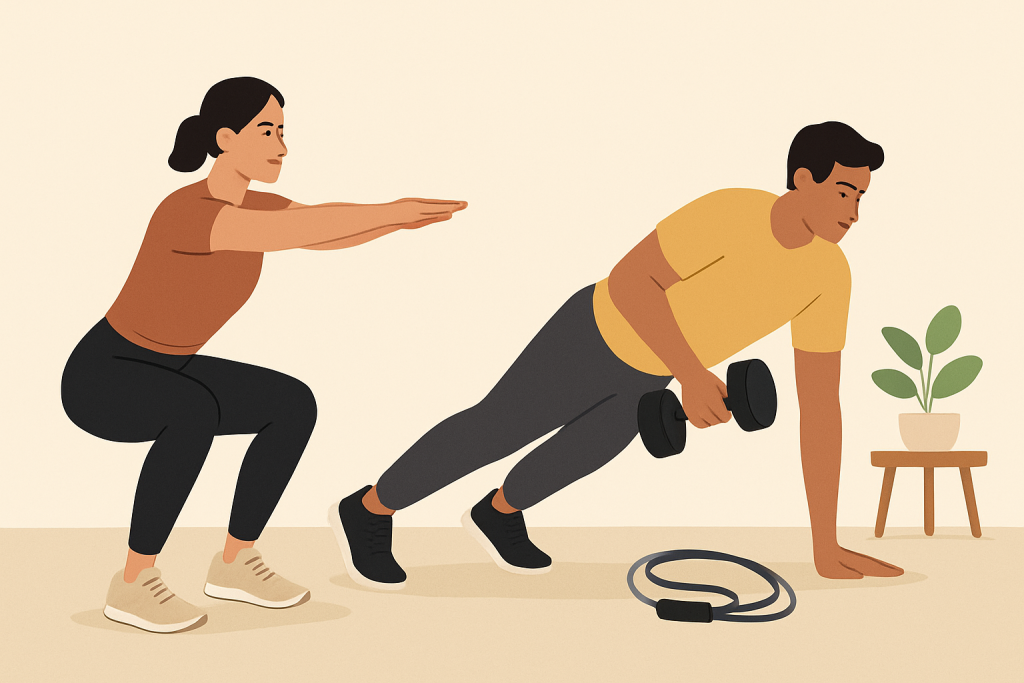
Functional strength exercises mimic real-world movements-lifting, hinging, pushing, pulling, and stabilizing. These movements make daily activities like carrying groceries or climbing stairs feel easier. With consistent practice, everyday strength improves without needing complex equipment.
Why Strength Building Matters for Daily Life
A strong body supports more than fitness goals. It affects how comfortably and confidently people move throughout the day.
Key benefits include:
- Improved joint stability
- Reduced risk of injury
- Better balance and coordination
- Increased energy
- Easier performance of daily tasks
- Stronger metabolism
Because these benefits impact every age group, strength-building exercises for everyday life are becoming part of many wellness routines.
Strength-Building Exercises for Everyday Life (2025 Guide)
The following exercises strengthen the body using natural movement patterns. They require little or no equipment and can be adapted for all fitness levels.
1. Squats: Build Lower Body and Core Strength
Squats help strengthen the legs, hips, and core-muscles used daily when standing up, sitting down, or lifting objects.
How to do it:
- Stand with feet hip-width apart.
- Keep your chest lifted as you bend your knees.
- Lower your hips until your thighs are parallel to the floor.
- Push through your heels to stand back up.
Benefits:
- Supports knee and hip stability
- Improves mobility
- Builds strength for daily lifting tasks
Squats remain one of the top strength-building exercises for everyday life because they mimic natural movement patterns.
2. Lunges: Improve Balance and Functional Leg Strength
Lunges develop unilateral strength, meaning each leg works independently. This helps correct muscle imbalances.
How to do it:
- Step forward with one leg.
- Bend both knees until the back knee nearly touches the floor.
- Push through your front heel to return to standing.
- Switch legs.
Benefits:
- Improves coordination
- Enhances stability
- Strengthens glutes, quads, and hamstrings
Lunges are especially useful for stair climbing, walking, and lower-body endurance.
3. Planks: Strengthen the Core for Daily Stability
Core strength affects nearly every movement in daily life. Planks build strength across the entire midsection without equipment.
How to do it:
- Start on your elbows with your body in a straight line.
- Keep your core tight and avoid letting your hips sag.
- Hold the position for 20-60 seconds.
Benefits:
- Enhances posture
- Supports safe lifting
- Improves balance
Planks also help reduce lower back strain by promoting strong abdominal support.
4. Glute Bridges: Support Hip Strength and Mobility
The glutes play a major role in walking, sitting, and maintaining posture. Glute bridges help strengthen these muscles while also activating the lower back and hamstrings.
How to do it:
- Lie on your back with knees bent and feet flat.
- Lift your hips toward the ceiling.
- Squeeze your glutes and lower slowly.
Benefits:
- Reduces back discomfort
- Supports hip stability
- Helps with lifting and carrying tasks
This exercise is ideal for people who sit frequently throughout the day.
5. Push-Ups: Strengthen the Upper Body and Core
Push-ups train the chest, shoulders, arms, and core at the same time. They require no equipment and can be modified for beginners.
How to do it:
- Start in a plank position with hands under shoulders.
- Bend your elbows to lower your chest.
- Push back up to the starting position.
Modifications:
- Wall push-ups
- Knee push-ups
- Incline push-ups
Benefits:
- Builds upper-body strength
- Improves shoulder stability
- Trains functional pushing movements
Push-ups are among the most versatile strength-building exercises for everyday life.
6. Rows: Support Posture and Pulling Strength
Rows strengthen the back muscles used during pulling tasks such as carrying bags or lifting objects.
How to do it (band version):
- Anchor a resistance band.
- Hold both ends and step back until tension builds.
- Pull the band toward your ribcage while squeezing your shoulder blades.
- Slowly release.
Benefits:
- Improves posture
- Reduces neck and shoulder tension
- Balances chest-dominant activities
Rows counter the effects of prolonged sitting.
7. Step-Ups: Improve Everyday Mobility
Step-ups mimic the movement used when climbing stairs or stepping onto platforms.
How to do it:
- Use a sturdy bench or step.
- Step onto the platform with one leg.
- Push through your heel to lift your body.
- Step down and switch legs.
Benefits:
- Increases leg strength
- Builds endurance
- Enhances balance
This exercise also improves functional single-leg stability.
8. Dead Bug: Strengthen the Core Without Strain
The dead bug exercise trains core stability while reducing pressure on the lower back.
How to do it:
- Lie on your back with arms extended upward.
- Raise your knees over your hips.
- Lower the opposite arm and leg simultaneously.
- Switch sides.
Benefits:
- Enhances coordination
- Promotes spinal stability
- Improves control during daily bending or reaching
It is especially useful for people who struggle with traditional core exercises.
9. Carry Exercises: Build Grip and Full-Body Strength
Carrying objects strengthens multiple muscle groups used in real-life tasks.
Examples include:
- Farmer’s carry
- Suitcase carry
- Overhead carry
Benefits:
- Improves grip strength
- Strengthens shoulders and core
- Enhances overall stability
Carrying exercises are among the most functional movements because they directly mimic daily lifting.
10. Hip Hinges: Protect the Lower Back
Hip hinge training teaches proper lifting technique, making daily bending safer.
How to do a hinge:
- Stand with feet hip-width apart.
- Push hips backward while keeping the back straight.
- Lower the torso slightly.
- Return to standing using the hips and glutes.
Benefits:
- Reduces back injury risk
- Builds posterior chain strength
- Improves lifting power
Many daily movements rely on proper hinge mechanics.
Additional Strength-Building Exercises for Everyday Life
Here are a few more helpful movements:
1. Wall sits – Build lower-body endurance.
2. Bird-dog – Enhance core stability and posture.
3. Calf raises – Support walking and balance.
4. Side lunges – Strengthen lateral movement.
5. Shoulder taps – Improve core control and upper-body stability.
These exercises complement a functional strength routine.
How to Incorporate These Exercises Into Daily Life
Consistency matters more than intensity. Here are simple ways to include strength building in everyday routines:
- Do a 10-minute morning mobility and strength session.
- Perform squats or lunges during breaks from work.
- Add core exercises before bed for improved posture.
- Use resistance bands while watching TV.
- Walk with light hand weights or a weighted backpack.
Small habits build lasting strength.
Conclusion
In 2025, functional strength remains essential for a healthier life. By practicing strength-building exercises for everyday life, people improve mobility, stability, and confidence in daily tasks. Movements such as squats, lunges, planks, step-ups, and carries require little space yet deliver real-world benefits.
When strength becomes part of daily routines, the body moves more efficiently, feels more capable, and withstands everyday challenges with ease.
Sources
- Mayo Clinic – Strength Training Basics
https://mayoclinic.org - ACE Fitness – Functional Training Techniques
https://acefitness.org - Verywell Fit – Beginner Strength Exercise Guide
https://verywellfit.com