
Remote healthcare adoption trends are reshaping how patients access medical services, how providers deliver care, and how health systems allocate resources. What began as a rapid response to global disruption has evolved into a structural transformation of healthcare delivery. Today, telehealth platforms, remote patient monitoring tools, and digital triage systems are becoming integrated parts of mainstream medical practice.
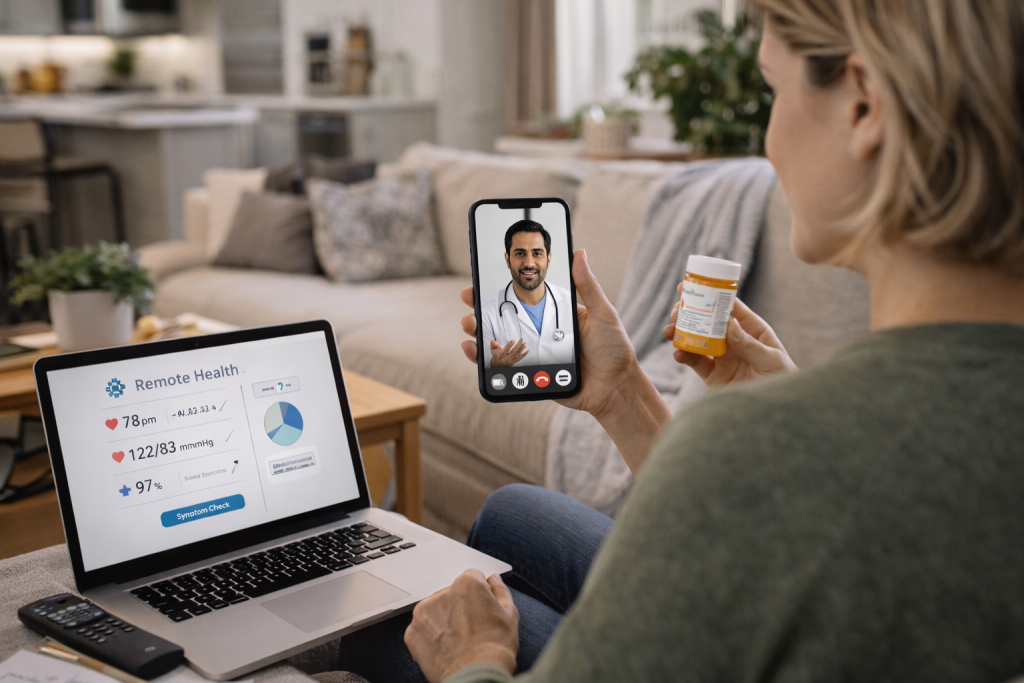
As healthcare systems face aging populations, workforce shortages, and rising costs, remote solutions are moving from optional services to strategic priorities. Understanding remote healthcare adoption trends is essential for providers, policymakers, and technology innovators navigating this evolving landscape.
The Shift From Emergency Solution to Long-Term Strategy
During the early stages of the pandemic, telehealth usage surged dramatically. However, the sustained adoption that followed signals a deeper behavioral shift. Patients who experienced the convenience of virtual consultations have continued using them for routine care, follow-ups, and mental health services.
According to the World Health Organization, digital health services expanded rapidly across regions, with many governments incorporating telemedicine into national health strategies. This institutional support has strengthened long-term adoption rather than temporary reliance.
At the same time, healthcare providers have invested in training, digital infrastructure, and workflow redesign to support virtual care integration. Consequently, remote healthcare adoption trends now reflect structural modernization rather than crisis response.
Telehealth Becoming a Standard Care Channel
Telehealth is no longer limited to primary consultations. It now supports a wide range of services, including:
- Chronic disease management
- Behavioral health therapy
- Post-surgical follow-ups
- Preventive screenings
- Specialist consultations
The American Medical Association reports that physicians increasingly view telehealth as a permanent component of practice. While in-person visits remain essential for certain diagnoses and procedures, virtual visits complement traditional models effectively.
Moreover, telehealth expands geographic reach. Rural and underserved communities benefit from improved access to specialists without long travel times. As a result, health equity considerations are central to remote healthcare adoption trends.
Remote Patient Monitoring Expanding Chronic Care
Remote patient monitoring (RPM) is one of the fastest-growing segments within digital health. Wearable devices and connected medical equipment allow providers to track vital signs in real time.
Patients with conditions such as diabetes, hypertension, and heart disease can share data automatically with care teams. This continuous monitoring supports early intervention and reduces hospital readmissions.
According to the Centers for Medicare & Medicaid Services, reimbursement policies for remote monitoring services have expanded in recent years. Policy alignment has therefore accelerated adoption across healthcare systems.
Additionally, RPM encourages patient engagement. Individuals who can see their own data trends are more likely to follow treatment plans and lifestyle recommendations.
Artificial Intelligence and Predictive Analytics
Remote healthcare adoption trends are closely tied to advancements in artificial intelligence. AI systems analyze patient data, identify risk patterns, and assist with triage decisions.
For example, predictive algorithms can flag early signs of deterioration in chronic patients. Virtual symptom checkers guide individuals toward appropriate care levels, reducing unnecessary emergency visits.
Deloitte’s healthcare industry outlook highlights AI integration as a major force shaping digital health innovation. However, successful implementation depends on regulatory oversight and transparency to ensure safety and trust.
AI is not replacing clinicians. Instead, it enhances decision-making by organizing large volumes of patient data efficiently.
Regulatory and Policy Developments
Regulatory frameworks significantly influence remote healthcare adoption trends. Temporary emergency policies introduced during the pandemic expanded reimbursement and cross-state licensing flexibility. Many jurisdictions have since revised regulations to support continued telehealth growth.
Governments are balancing innovation with patient protection. Data privacy standards, cybersecurity measures, and ethical guidelines are evolving alongside digital expansion.
In addition, cross-border telemedicine is gaining attention. As digital consultations become more common, regulatory cooperation may expand international healthcare collaboration.
Policy clarity remains essential. Without stable reimbursement structures and compliance guidelines, adoption may slow.
Patient Experience and Behavioral Shifts
Patient expectations are changing. Convenience, speed, and digital access are increasingly valued. Scheduling appointments online, receiving prescriptions electronically, and accessing health records through apps are becoming routine experiences.
Remote healthcare adoption trends reflect this shift toward consumer-centered care. Healthcare is adapting to digital service standards seen in banking and retail industries.
However, digital literacy and access disparities remain concerns. Older populations and low-income communities may face barriers to technology use. Therefore, inclusive design and community outreach programs are necessary to ensure equitable participation.
Workforce Implications
Remote care models influence healthcare workforce structures. Virtual consultations allow providers to manage schedules more flexibly. In some cases, clinicians can deliver services across multiple facilities from centralized digital platforms.
This flexibility may help address provider shortages, particularly in specialized fields. At the same time, training programs must adapt to prepare clinicians for digital communication skills and technology management.
Healthcare organizations are also investing in hybrid care models. These models combine in-person diagnostics with virtual follow-ups, optimizing resource allocation while maintaining quality standards.
Cybersecurity and Data Protection
As remote healthcare adoption trends expand, cybersecurity becomes increasingly important. Healthcare data is highly sensitive, and breaches can undermine patient trust.
Institutions are strengthening encryption protocols, multi-factor authentication, and secure cloud storage systems. Regulatory compliance frameworks, such as data protection laws, guide digital health operations.
Technology vendors and healthcare providers must collaborate to maintain secure ecosystems. Without strong safeguards, adoption momentum could slow due to privacy concerns.
Economic Impact and Cost Efficiency
Remote healthcare has the potential to reduce operational costs. Virtual consultations decrease facility overhead and streamline administrative processes. Patients also save on travel expenses and time away from work.
The World Economic Forum notes that digital health innovation can contribute to long-term system sustainability. However, cost savings depend on effective integration rather than parallel service duplication.
Strategic implementation ensures that digital services complement existing infrastructure instead of adding complexity.
The Future of Remote Healthcare
Looking forward, remote healthcare adoption trends are likely to accelerate through integration with wearable devices, smart home technologies, and advanced analytics.
Interoperability between digital platforms will become increasingly important. Seamless data exchange across providers enhances care continuity.
Additionally, virtual reality and augmented reality tools may expand applications in medical training and rehabilitation therapy. As innovation continues, healthcare delivery models will become more adaptable and patient-focused.
Remote healthcare is no longer an experimental concept. It represents a structural transformation in how medical services are delivered and experienced. While challenges remain in regulation, equity, and cybersecurity, the long-term trajectory suggests continued integration into global health systems.
References
World Health Organization – Global Strategy on Digital Health: https://www.who.int
American Medical Association – Telehealth Research: https://www.ama-assn.org
Centers for Medicare & Medicaid Services – Remote Patient Monitoring: https://www.cms.gov
Deloitte – Healthcare Industry Outlook: https://www2.deloitte.com