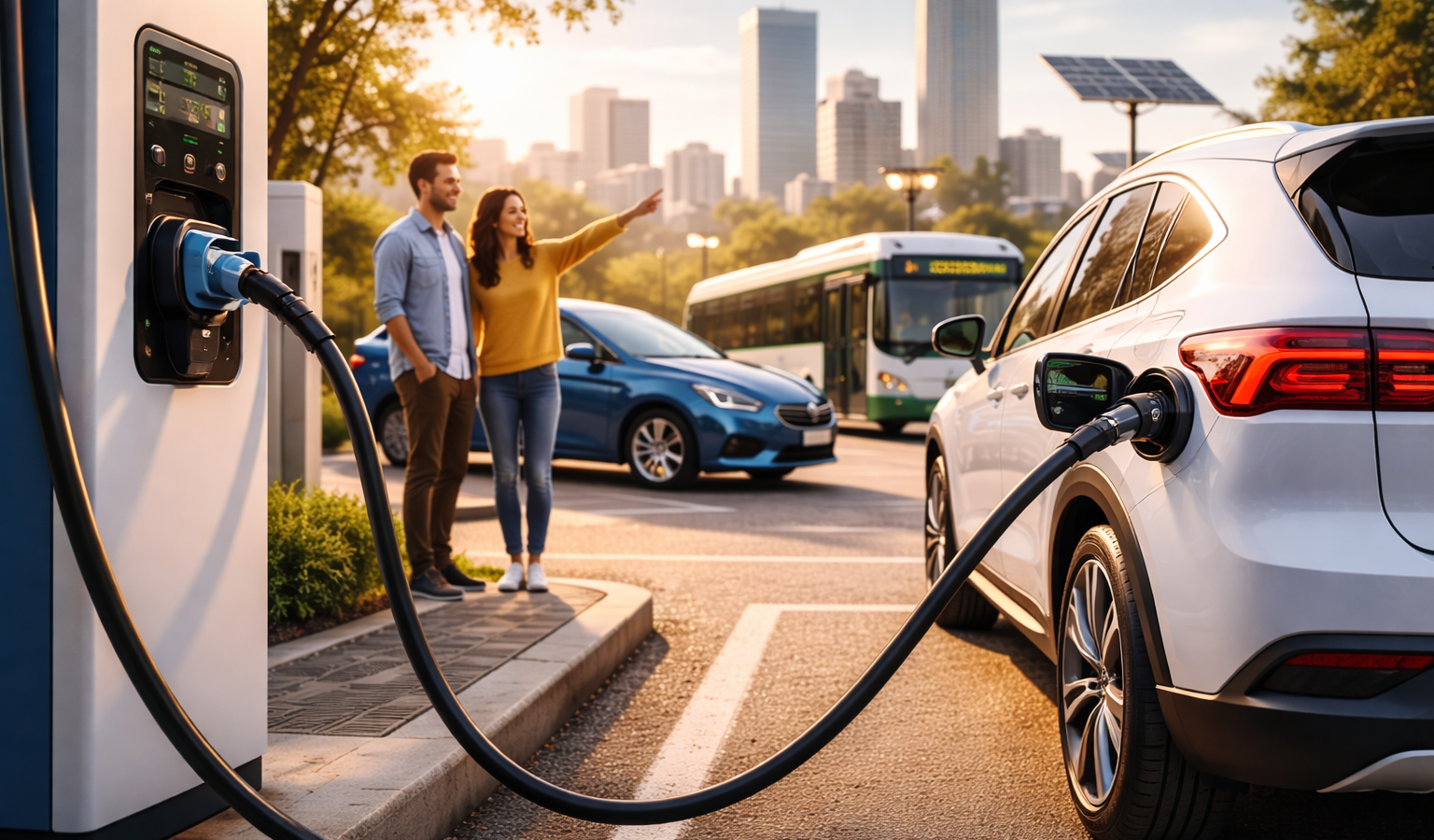
Transportation Electrification Trends are reshaping how people and goods move across cities, regions, and global markets. What began as a niche shift toward electric passenger vehicles has expanded into a broader transformation that includes buses, freight trucks, two-wheelers, rail systems, and even aviation pilots. Governments, automakers, and energy providers are investing heavily in electrified transport systems to reduce emissions, improve air quality, and modernize infrastructure.
Electrification is not simply about replacing internal combustion engines with batteries. It involves grid modernization, charging infrastructure expansion, policy incentives, battery innovation, and consumer behavior changes. As these components align, transportation electrification trends are accelerating across multiple sectors.
In this article, we explore the forces driving electrification, the sectors experiencing the fastest change, and what the future of electric mobility may look like.
Why Transportation Electrification Trends Are Accelerating
Several structural forces are pushing electrification forward.
First, climate policy has become a central driver. The International Energy Agency reports that transport accounts for a significant share of global carbon dioxide emissions, making electrification a key strategy for decarbonization (International Energy Agency – Global EV Outlook: https://www.iea.org).
Second, battery costs have declined significantly over the past decade. According to BloombergNEF, falling lithium-ion battery prices have made electric vehicles increasingly cost-competitive with traditional vehicles (BloombergNEF – Battery Price Survey: https://about.bnef.com).
Third, urban air quality concerns have motivated policy action. Cities around the world are implementing low-emission zones and encouraging electric vehicle adoption to reduce pollution.
Together, these forces explain why transportation electrification trends are expanding beyond passenger cars.
Growth of Electric Passenger Vehicles
Passenger electric vehicles (EVs) remain the most visible segment of electrification.
Automakers are expanding EV portfolios, while governments provide incentives such as:
- Purchase subsidies
- Tax credits
- Reduced registration fees
- Access to carpool lanes
The IEA’s Global EV Outlook indicates that global electric car sales have grown rapidly in recent years, representing a rising share of new vehicle registrations (IEA – Global EV Outlook).
Improved driving range, faster charging times, and broader model availability have increased consumer confidence.
Charging Infrastructure Expansion
Infrastructure is central to transportation electrification trends.
The expansion of public and private charging networks includes:
- Fast-charging highway corridors
- Urban charging stations
- Workplace chargers
- Residential installations
The U.S. Department of Energy highlights significant investment in EV charging networks to support adoption (U.S. Department of Energy – Alternative Fuels Data Center: https://afdc.energy.gov).
Reliable infrastructure reduces range anxiety and supports long-distance travel feasibility.
Electrification of Public Transit
Public transit electrification is gaining momentum globally.
Electric buses are increasingly deployed in major cities to reduce emissions and operating costs. The International Council on Clean Transportation reports substantial growth in electric bus fleets worldwide (ICCT – Electric Bus Deployment: https://theicct.org).
Benefits include:
- Lower fuel costs
- Reduced maintenance requirements
- Improved urban air quality
- Quieter city environments
Transit electrification contributes to broader sustainability goals while enhancing rider experience.
Commercial and Freight Electrification
Heavy-duty vehicles are a critical focus area for transportation electrification trends.
Freight trucks contribute significantly to transportation emissions. Electric and hybrid models are emerging to address this challenge.
Advances include:
- Battery-electric delivery vans
- Electric long-haul truck prototypes
- Electrified port operations
- Warehouse vehicle electrification
Logistics companies are increasingly integrating electric fleets to align with sustainability commitments.
Grid Modernization and Energy Integration
Electrification increases demand for electricity infrastructure upgrades.
Grid modernization efforts include:
- Renewable energy integration
- Smart charging systems
- Vehicle-to-grid technology
- Distributed energy storage
The International Renewable Energy Agency emphasizes the importance of aligning electric vehicle growth with renewable energy expansion to maximize climate benefits (IRENA – Renewable Energy and Transport: https://www.irena.org).
Smart charging systems can help balance grid loads by adjusting charging times based on demand.
Battery Innovation and Supply Chain Challenges
Battery development remains central to electrification progress.
Research focuses on:
- Increasing energy density
- Reducing charging times
- Improving battery lifespan
- Expanding recycling capacity
However, supply chain concerns related to critical minerals such as lithium and cobalt remain significant.
Sustainable sourcing and recycling systems are increasingly integrated into long-term electrification planning.
Electrification Beyond Road Transport
Transportation electrification trends are expanding into other sectors.
Rail systems are adopting electrified networks to reduce diesel dependence. Short-distance aviation and maritime pilots are exploring electric propulsion systems.
Although these sectors face technological and energy-density challenges, research and pilot programs continue advancing.
Policy and Regulatory Support
Government policies remain central to electrification momentum.
Common policy mechanisms include:
- Emission standards
- Zero-emission vehicle mandates
- Infrastructure investment programs
- Research and development funding
The World Economic Forum highlights how coordinated policy frameworks accelerate technology adoption (World Economic Forum – Clean Transport Initiatives: https://www.weforum.org).
Clear regulatory signals reduce uncertainty for manufacturers and investors.
Consumer Behavior and Market Adoption
Consumer perceptions influence adoption speed.
Key factors include:
- Total cost of ownership comparisons
- Charging convenience
- Brand trust
- Government incentives
As public awareness increases and charging networks expand, consumer adoption may continue rising steadily.
Education about maintenance savings and long-term fuel cost reductions plays an important role.
Challenges and Considerations
Despite progress, transportation electrification trends face challenges.
Infrastructure Gaps
Rural charging networks remain limited in some regions.
Upfront Costs
Electric vehicles may still carry higher initial prices without incentives.
Battery Resource Dependence
Critical mineral supply chains require sustainable management.
Grid Capacity Constraints
Rapid electrification may strain local energy systems without upgrades.
Addressing these challenges requires coordinated policy and technological innovation.
The Future of Electrified Mobility
Looking ahead, transportation electrification trends are likely to deepen and diversify.
Future developments may include:
Expanded fast-charging networks
Solid-state battery breakthroughs
Greater integration of renewable energy
Electrified freight corridors
Autonomous electric vehicle fleets
As electrification scales, transportation systems may become more efficient, interconnected, and environmentally aligned.
Conclusion
Transportation Electrification Trends reflect a fundamental transformation in how mobility systems operate. From passenger vehicles to freight fleets and public transit networks, electrification is reshaping transportation infrastructure, energy systems, and environmental strategy.
While challenges remain—particularly around infrastructure expansion and supply chain sustainability—the trajectory of electrification appears firmly established. Policy alignment, technological innovation, and consumer adoption are reinforcing one another.
As cities pursue cleaner air, governments pursue emission reduction goals, and manufacturers innovate at scale, electrified transportation is becoming a defining component of the future mobility landscape.
References
International Energy Agency – Global EV Outlook: https://www.iea.org
BloombergNEF – Battery Price Survey: https://about.bnef.com
U.S. Department of Energy – Alternative Fuels Data Center: https://afdc.energy.gov
International Council on Clean Transportation – Electric Bus Deployment: https://theicct.org
International Renewable Energy Agency – Renewable Energy and Transport: https://www.irena.org
World Economic Forum – Clean Transport Initiatives: https://www.weforum.org