
Maintaining a healthy, attractive garden doesn’t always require constant work. In fact, many gardeners discover that focusing on seasonal garden tasks that save time long-term creates a landscape that is easier to manage, more resilient, and more enjoyable year-round. The key is working with nature rather than against it. By completing specific projects at the right time of year, you reduce future maintenance, prevent recurring issues, and avoid the stress of reactive gardening.
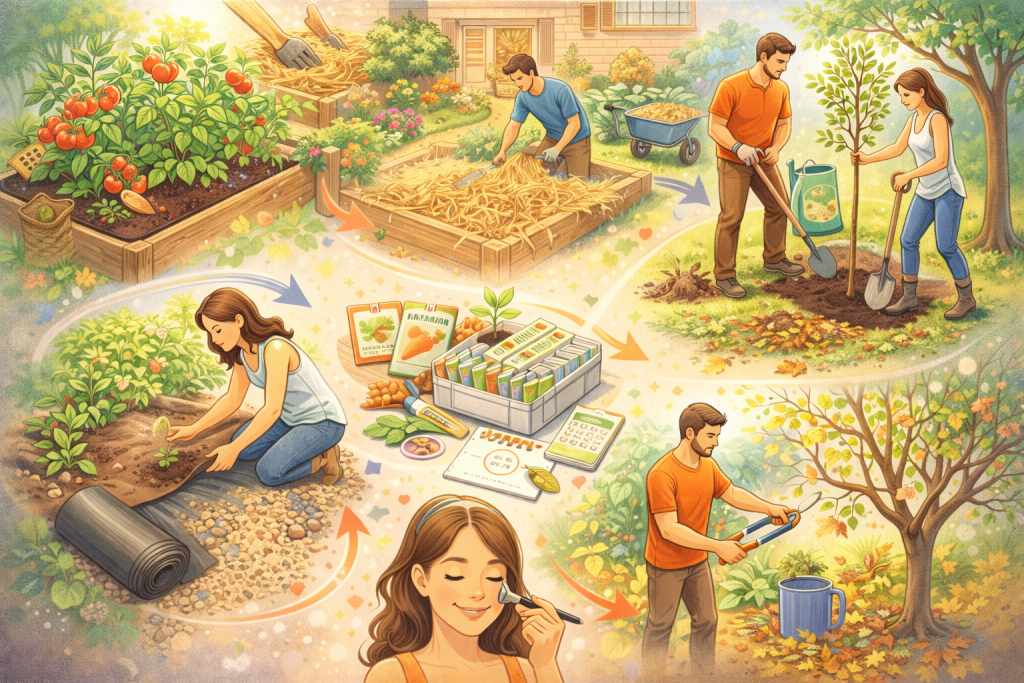
Whether you’re caring for a small urban garden or a larger backyard landscape, smart seasonal planning can simplify your workload significantly. Below, we explore essential tasks for each season that support long-term garden health and save hours of effort over the course of the year.
Why Seasonal Planning Saves More Time Than Constant Upkeep
Gardening becomes stressful when maintenance piles up unexpectedly. A burst of weeds, an overgrown hedge, or soil that dries out too fast can quickly turn enthusiasm into frustration. Many of these problems occur because tasks weren’t timed with seasonal transitions in mind.
Seasonal planning helps because:
- It aligns tasks with natural growth cycles
- Weather conditions support better results
- Plants establish more easily
- Soil is easier to amend at specific times of year
- Preventive care reduces future issues
- Maintenance becomes predictable and efficient
This is why seasonal garden tasks that save time long-term are essential. They allow gardeners to stay ahead rather than constantly catch up.
Spring Prep That Reduces Summer Workload
Spring is the ideal time to refresh the garden after winter’s dormancy. Tasks completed in spring lay the groundwork for easier maintenance during the hotter months ahead.
Effective spring tasks include:
Clearing debris early
Removing winter leaves, fallen branches, and dead plant material helps reduce pests and improves airflow around plants.
Refreshing soil with compost
A thin layer of compost boosts nutrients and improves soil structure, reducing the need for frequent fertilizers later in the year.
Mulching garden beds
Mulching helps retain moisture, suppress weeds, and stabilize soil temperature-saving time on watering and weed control throughout the summer.
Setting up irrigation systems
Installing or testing drip lines, hoses, and sprinklers in spring prepares the garden for hotter months and ensures plants get consistent moisture.
Completing these tasks early ensures healthier growth and reduces the highest-effort chores that typically occur during summer.
Summer Maintenance That Prevents Stress Later
Summer is a high-growth period, which means plants can become unruly without consistent attention. However, targeted maintenance can prevent overwhelming workloads and keep the garden thriving.
Helpful summer tasks include:
Deep watering less frequently
Watering deeply and less often encourages deeper root development, leading to stronger, more drought-resistant plants.
Deadheading flowers
Removing spent blooms promotes continued flowering and prevents plants from putting energy into seed production.
Light trimming of fast-growing shrubs
Small shaping trims help maintain structure and prevent heavy pruning later in the year.
Monitoring mulch levels
Mulch breaks down naturally over time; adding a small layer during summer maintains moisture during heat waves.
These small but strategic steps are examples of seasonal garden tasks that save time long-term, because they prevent bigger issues like overgrowth, pest buildup, or water stress.
Autumn Tasks That Prepare the Garden for Dormancy
Autumn is one of the most important seasons for long-term garden success. Temperatures cool, rainfall increases, and soil remains warm-ideal conditions for planting and preparing for the next growing cycle.
Valuable autumn tasks include:
Planting trees and shrubs
Autumn planting gives roots time to establish before winter and reduces watering needs during summer.
Dividing perennials
Splitting crowded plants helps control size, improves health, and provides new plants for other areas.
Raking leaves and adding them to compost
Leaves make excellent compost material, and removing thick layers prevents mold and pests.
Applying a winter layer of mulch
This helps protect roots from freezing temperatures and prevents soil erosion.
Autumn preparation ensures the garden enters winter strong and sets the stage for low-maintenance growth in spring.
Winter Planning That Simplifies the Year Ahead
Winter is often a restful time in the garden, but a few strategic tasks can make the next season much easier.
Tasks that save time include:
Tool maintenance
Cleaning, sharpening, and repairing tools now ensures they’re ready for spring work.
Garden layout planning
Choosing where to plant vegetables, herbs, or new shrubs avoids last-minute decisions when growing seasons begin.
Pruning dormant trees (in appropriate climates)
Dormant pruning reduces disease risk and improves structure without stressing the plant.
Protecting sensitive plants
Covering vulnerable plants or moving potted species indoors prevents winter damage and reduces spring cleanup.
Strategic winter planning ensures gardeners don’t feel rushed or overwhelmed when the growing season starts.
Soil Care That Improves Every Season
Healthy soil is the backbone of low-maintenance gardening. Instead of constantly fighting nutrient imbalances or poor structure, focus on improving soil gradually through seasonal habits.
Simple soil-building practices include:
- Adding compost in spring and autumn
- Planting cover crops where appropriate
- Avoiding frequent tilling to preserve soil microbes
- Using mulch to regulate moisture and reduce erosion
- Testing soil every few years to monitor nutrient levels
Better soil means healthier plants and significantly fewer issues year-round.
Plant Selection That Naturally Reduces Maintenance
One of the most powerful seasonal garden tasks that save time long-term is choosing plants wisely. Selecting varieties appropriate for your climate, soil type, and sun exposure reduces the need for constant water, fertilizer, and pruning.
Good choices include:
- Native plants that thrive in local conditions
- Drought-tolerant perennials
- Slow-growing shrubs
- Long-blooming, low-maintenance flowers
- Groundcovers that suppress weeds
Choosing the right plants from the start helps shape a garden that is visually appealing and easier to maintain through seasonal changes.
Consistent Weed Prevention Instead of Reactive Removal
Weed control becomes much easier when handled early and consistently.
Time-saving weed strategies include:
- Mulching to block weed growth
- Hand-pulling small weeds before they establish deep roots
- Using drip irrigation instead of overhead watering
- Planting dense groundcovers to outcompete weeds
These habits reduce the need for heavy-duty weed removal later in the year.
Smart Watering Systems That Reduce Manual Work
Watering takes up a significant amount of gardening time, especially during dry seasons. Automation saves hours of effort and ensures consistent moisture.
Options include:
- Drip irrigation
- Soaker hoses
- Timed watering systems
- Smart irrigation controllers that adjust for weather
Automating watering is one of the top seasonal garden tasks that save time long-term, because it prevents water stress and reduces manual effort throughout the year.
Conclusion
A well-designed garden is not built on constant effort-it’s built on consistency and smart timing. By focusing on seasonal garden tasks that save time long-term, gardeners can reduce stress, prevent common issues, and foster healthier growth throughout the year. With strategic planning in spring, efficient maintenance in summer, smart preparation in autumn, and thoughtful organization in winter, any garden can become easier to manage and more enjoyable in every season.
References
- University of Minnesota Extension – Seasonal Yard and Garden Care
https://extension.umn.edu - Royal Horticultural Society – Gardening Advice by Season
https://www.rhs.org.uk - Better Homes & Gardens – Low-Maintenance Gardening Tips
https://www.bhg.com - The Old Farmer’s Almanac – Seasonal Garden Checklist
https://www.almanac.com