The way a home feels has a direct impact on mood, focus, and emotional balance. Small changes in the living environment can quickly influence how calm, energized, or grounded a space feels. This is why simple home updates that improve mood instantly are gaining attention among people who want noticeable results without major renovations or expense.
Mood-enhancing updates work because they reduce friction in daily life. They improve comfort, light, flow, and sensory balance, helping the home support wellbeing rather than drain it. These changes are practical, repeatable, and effective precisely because they address everyday experience, not decoration alone.
This article explores simple home updates that improve mood instantly by focusing on light, layout, color, texture, and small environmental shifts that make a meaningful difference right away.
Why Small Home Changes Affect Mood So Quickly
The brain responds rapidly to environmental cues. Light levels, visual order, sound, and comfort all influence stress levels and emotional state. When a space feels cluttered, dim, or uncomfortable, mental tension often follows.
Simple updates work because they remove subtle stressors. They make spaces easier to navigate, more pleasant to occupy, and more aligned with daily routines. Even modest improvements can shift how a room feels within minutes.
Mood improvement does not require transformation. It requires responsiveness to how people actually live.
Improving Natural Light Exposure
Light is one of the fastest ways to influence mood. Increasing natural light immediately changes how a space feels.
Simple actions such as opening curtains fully, cleaning windows, or repositioning furniture away from light sources can brighten a room noticeably. Lighter window treatments allow daylight to spread more evenly, reducing heaviness and visual fatigue.
Natural light supports alertness during the day and helps regulate sleep patterns, making this update especially effective.
Adjusting Artificial Lighting for Comfort
When natural light is limited, artificial lighting plays a critical role in mood. Harsh or poorly placed lighting often creates tension without being consciously noticed.
Switching to warmer bulbs, adding table or floor lamps, or layering light sources creates a softer, more comfortable atmosphere. Lighting placed at eye level rather than overhead reduces glare and improves visual balance.
These updates are quick to implement and often change the emotional tone of a room immediately.
Reducing Visual Clutter to Calm the Mind
Clutter competes for attention and increases cognitive load. Reducing it is one of the most effective simple home updates that improve mood instantly.
This does not require deep cleaning. Clearing visible surfaces, removing unused items, or grouping objects intentionally can restore a sense of order. When the eye has fewer distractions, the mind relaxes.
Visual clarity supports emotional clarity, especially in shared or high-use spaces.
Introducing Soft Textures for Comfort
Texture affects how a space feels as much as how it looks. Hard surfaces dominate many modern interiors, which can feel cold or uninviting.
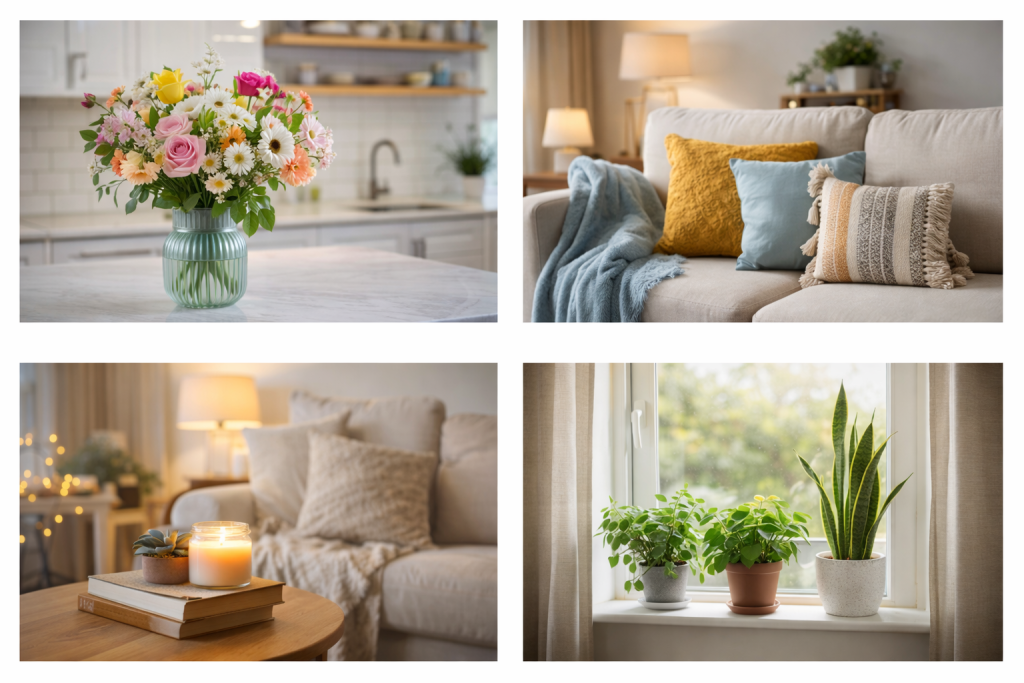
Adding soft textures such as cushions, throws, rugs, or fabric wall hangings instantly increases comfort. These elements absorb sound, add warmth, and create a sense of safety.
Textile updates are flexible and reversible, making them ideal for quick mood improvement.
Using Color Accents Strategically
Color influences emotion, but large changes are not necessary. Small color accents can shift mood without overwhelming a space.
Introducing calming tones through pillows, artwork, or small decor items can soften the environment. Muted greens, warm neutrals, and gentle blues are often associated with relaxation, while warmer tones can add energy when used carefully.
Keeping color updates minimal preserves balance while still creating impact.
Rearranging Furniture to Improve Flow
Poor furniture placement can make a room feel cramped or unsettled. Rearranging existing furniture often improves mood without any purchases.
Creating clearer pathways, opening sightlines to windows, or orienting seating toward natural focal points improves ease of movement. When a room feels easier to use, it feels better to be in.
Flow supports comfort, especially in spaces used daily.
Adding Natural Elements Indoors
Nature has a calming effect on the nervous system. Introducing natural elements is one of the most reliable simple home updates that improve mood instantly.
Plants, natural wood, stone, or woven materials bring organic texture into the home. Even small touches, such as a plant on a desk or natural materials on a shelf, can reduce stress and improve atmosphere.
Connection to nature supports emotional balance, even indoors.
Refreshing Scents Without Overpowering
Smell is closely linked to emotion and memory. Subtle scent changes can influence mood quickly.
Opening windows to refresh air, using natural materials, or keeping spaces clean often has a greater effect than artificial fragrances. If scents are used, they should be light and unobtrusive.
Fresh air and neutral environments support clarity and comfort.
Improving Seating Comfort
Uncomfortable seating quietly affects mood by creating physical tension. Improving comfort in frequently used chairs or sofas can change how a space feels immediately.
Adding cushions, adjusting support, or repositioning seating can reduce strain. Comfortable seating encourages relaxation and makes spaces more inviting.
Physical comfort and emotional comfort are closely connected.
Enhancing Personal Meaning Through Small Displays
Spaces feel better when they reflect personal identity. Adding or rearranging meaningful items can improve mood quickly.
Photographs, books, or objects with positive associations add warmth and familiarity. These items remind occupants of connection, accomplishment, or calm.
Personal meaning creates emotional grounding within the home.
Tidying Entryways to Improve Daily Transitions
The entryway shapes first impressions and daily transitions. A cluttered or dark entry often creates unnecessary stress.
Simple updates such as clearing shoes, adding hooks, or improving lighting make arrivals and departures smoother. This small space influences mood more than its size suggests.
Improved transitions reduce daily friction.
Balancing Sound in Living Spaces
Noise levels affect mood, even when they are low-level or constant. Softening sound improves comfort.
Adding rugs, curtains, or soft furnishings reduces echo and harshness. Quieter environments support focus and relaxation, especially in shared spaces.
Sound balance contributes to a sense of calm without requiring silence.
Adjusting Temperature for Comfort
Temperature discomfort often goes unnoticed until it affects mood. Small adjustments can make a big difference.
Using throws, adjusting airflow, or addressing drafts improves physical comfort quickly. When the body is comfortable, emotional regulation improves naturally.
Temperature balance supports overall wellbeing.
Creating Clear Zones for Different Activities
Homes that lack defined zones can feel chaotic. Clarifying purpose improves mood by reducing decision fatigue.
Simple changes such as repositioning furniture or lighting can define areas for rest, work, or socializing. Clear zones help the brain shift modes more easily.
Functional clarity reduces stress.
Letting Go of Unused Items
Holding onto unused items creates subtle tension. Removing them creates space physically and mentally.
This does not require minimalism. It requires honesty about what supports daily life. Letting go of what no longer serves the space improves mood through relief and clarity.
Space itself is calming.
Supporting Routine Through Small Adjustments
Homes feel better when they support routine. Simple changes that align with daily habits improve mood consistently.
Placing frequently used items within easy reach, organizing storage logically, or adjusting lighting schedules reduces friction. When routines flow smoothly, stress decreases.
The home becomes supportive rather than demanding.
Recognizing the Emotional Impact of Order
Order does not mean perfection. It means intentional placement and ease of use.
When items have clear homes and spaces feel intentional, the environment communicates calm. This emotional signal influences behavior and mindset throughout the day.
Order supports wellbeing quietly but effectively.
Keeping Changes Manageable and Reversible
The most effective mood-improving updates are easy to undo. This reduces pressure and encourages experimentation.
Reversible changes allow people to respond to mood and season without commitment. Flexibility supports long-term satisfaction.
Confidence in change improves emotional response.
Conclusion
Simple home updates that improve mood instantly work because they address how people experience their spaces every day. Adjustments to light, comfort, layout, and sensory balance remove small stressors that accumulate over time.
These changes do not require major redesigns. They require attention to how a space feels, moves, and supports routine. When the home becomes easier and more pleasant to live in, mood improves naturally.
By focusing on small, intentional updates, homes can become environments that restore energy, reduce tension, and support emotional wellbeing on a daily basis.
Sources
- Harvard Health Publishing – How Your Environment Affects Mental Health
https://www.health.harvard.edu - American Psychological Association – The Impact of Environment on Wellbeing
https://www.apa.org - Psychology Today – Why Small Environmental Changes Improve Mood
https://www.psychologytoday.com