Travel seasons ideal for outdoor photography are becoming a central consideration for travelers who plan trips around light, color, and atmosphere rather than peak tourism calendars. In 2025, photographers-both amateur and professional-are increasingly timing journeys to match natural cycles such as foliage changes, weather transitions, and wildlife movement. The result is more intentional travel that prioritizes visual storytelling over convenience.
Outdoor photography is deeply influenced by seasonality. Light quality, weather patterns, and landscape character shift dramatically throughout the year, shaping not only what can be captured but how a place feels. This article explores how different travel seasons affect outdoor photography, which conditions photographers seek most, and why seasonal planning has become a defining factor in modern travel.
Why Season Matters More Than Destination Alone
A location photographed at the wrong time of year can feel flat, while a familiar place captured during the right season can appear entirely new. This is why travel seasons ideal for outdoor photography often matter more than the destination itself.
Seasonal timing affects:
- Angle and softness of natural light
- Color palettes in landscapes
- Atmospheric conditions such as mist, snow, or dust
- Human presence and crowd density
Photographers increasingly research solar paths, average cloud cover, and seasonal weather stability before booking trips. Tools and climate data shared by organizations such as National Geographic have made this type of planning more accessible.
Spring: Renewal, Contrast, and Soft Light
Spring is one of the most versatile travel seasons for outdoor photography. As landscapes transition from dormancy to growth, photographers gain access to fresh color contrast and dynamic weather conditions.
Key visual advantages of spring include:
- Blooming flora creating natural focal points
- Snowmelt rivers adding movement to compositions
- Softer daylight compared to summer harshness
In many regions, spring offers lower tourist density, allowing cleaner compositions without crowds. However, timing is critical. Early spring may still carry winter’s muted tones, while late spring can quickly transition into summer brightness.
For landscape photographers, spring is particularly effective for capturing renewal themes and layered scenes combining lingering snow with emerging greenery.
Summer: Long Days and High-Contrast Conditions
Summer is often associated with travel convenience, but for photography, it presents both advantages and challenges. Extended daylight hours allow more shooting time, especially in higher latitudes where golden hours stretch late into the evening.
Benefits of summer photography include:
- Access to remote locations due to open roads and trails
- Vibrant color saturation in coastal and alpine regions
- Consistent weather windows for planning
However, summer light can be harsh during midday, producing strong shadows and reduced texture. Photographers often work around this by shooting early mornings and late evenings.
Travel seasons ideal for outdoor photography during summer tend to favor regions with dramatic terrain, where contrast enhances scale rather than overwhelms detail.
Autumn: Color Depth and Directional Light
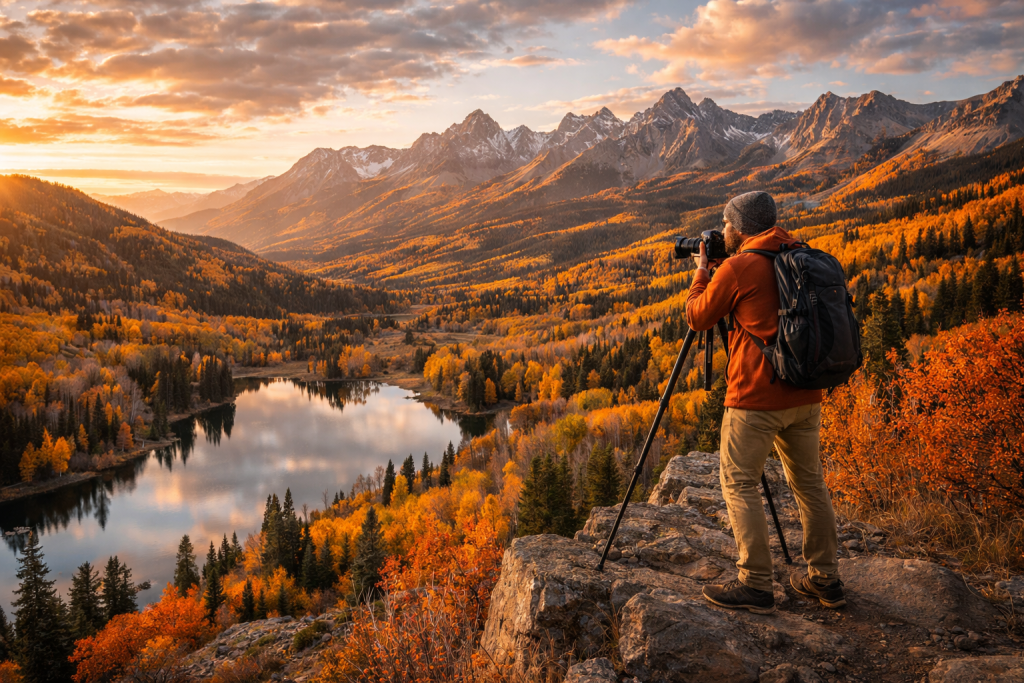
Autumn is widely considered one of the strongest seasons for outdoor photography. Deciduous forests, vineyards, and mountainous regions transform into layered compositions of warm tones.
Autumn photography is defined by:
- Rich color palettes dominated by reds, golds, and browns
- Lower sun angles creating directional, textured light
- Increased atmospheric effects such as fog and haze
Timing remains critical, as peak foliage periods can be brief and weather-dependent. Many photographers plan flexible itineraries or remain in one region for extended periods to adapt to changing conditions.
Publications such as Smithsonian Magazine frequently highlight autumn landscapes as prime examples of seasonal transformation, reinforcing their popularity among visual storytellers.
Winter: Minimalism and Atmospheric Drama
Winter photography appeals to those drawn to simplicity, contrast, and atmosphere. Snow-covered landscapes reduce visual noise, allowing photographers to focus on form, shadow, and composition.
Winter offers unique opportunities such as:
- Clean lines created by snow and ice
- Dramatic skies enhanced by low sun angles
- Seasonal phenomena like frost, frozen waterfalls, and auroras
Cold temperatures and limited daylight require preparation, but the visual rewards can be significant. Winter travel often results in quieter destinations, which supports uninterrupted shooting and more contemplative work.
For photographers interested in mood-driven imagery, winter represents one of the most distinctive travel seasons ideal for outdoor photography.
Shoulder Seasons and Transitional Moments
Beyond the four traditional seasons, many photographers seek transitional periods known as shoulder seasons. These brief windows often produce unexpected visual combinations.
Examples include:
- Early spring snow mixed with blossoms
- Late autumn leaves under early snowfall
- Pre-monsoon skies with dramatic cloud formations
These moments are less predictable but highly rewarding. They encourage patience and adaptability, traits increasingly valued in outdoor photography culture.
Travelers who plan around shoulder seasons often accept some uncertainty in exchange for originality and reduced competition for iconic viewpoints.
Weather Patterns and Regional Differences
Seasonal photography is highly regional. A season that works well in one location may be ineffective in another due to climate variation.
For example:
- Summer may bring storms in tropical regions
- Winter can be dry and clear in desert environments
- Spring may arrive months earlier in coastal areas
Understanding regional climate patterns is essential. Many photographers rely on long-term climate data and travel advisories from sources like World Meteorological Organization to anticipate conditions accurately.
This research-driven approach reflects how outdoor photography travel has become more strategic over time.
Wildlife Photography and Seasonal Timing
Wildlife photography is especially dependent on seasonal travel planning. Animal behavior changes throughout the year based on migration, breeding, and feeding cycles.
Seasonal considerations include:
- Migration periods for birds and marine life
- Breeding seasons that influence animal movement
- Seasonal scarcity or abundance of food sources
Travel seasons ideal for outdoor photography in wildlife contexts are often narrow but predictable. Photographers align trips closely with biological calendars rather than tourist seasons.
This approach emphasizes observation and patience, reinforcing photography as a form of environmental engagement.
Light Quality and Latitude
Latitude plays a major role in determining seasonal light characteristics. In higher latitudes, summer brings extended daylight, while winter offers dramatic twilight conditions.
Photographers consider:
- Length of golden and blue hours
- Direction of sunrise and sunset throughout the year
- Seasonal cloud patterns affecting diffusion
These factors shape composition choices and shooting schedules. For landscape photographers, understanding seasonal light movement can be as important as choosing the destination itself.
Planning Travel Around Photography Goals
Rather than traveling broadly, many photographers now plan trips around specific visual goals. This might involve waiting years for ideal conditions or returning to the same location across multiple seasons.
Effective planning often includes:
- Defining a clear photographic objective
- Researching historical weather and light conditions
- Allowing schedule flexibility when possible
Travel seasons ideal for outdoor photography are rarely about convenience. They are about alignment between environment, timing, and creative intent.
How Seasonal Photography Influences Travel Behavior
Seasonal photography has influenced broader travel patterns. Destinations once considered off-season are gaining attention for their visual uniqueness.
This shift supports:
- Reduced overcrowding during peak months
- More even distribution of tourism revenue
- Increased appreciation for environmental cycles
As photography-driven travel grows, it encourages deeper respect for natural rhythms rather than standardized travel calendars.
Conclusion
Seasonality has become one of the most powerful tools in outdoor photography travel. By aligning journeys with light, weather, and natural cycles, photographers are creating more distinctive and meaningful work.
Travel seasons ideal for outdoor photography emphasize timing over trends and observation over speed. Whether capturing spring renewal, autumn color, or winter minimalism, seasonal awareness transforms not only images but the travel experience itself.
As more travelers plan around visual conditions, photography continues to shape how and when people explore the world.
Sources
National Geographic – Photography and Travel Guides
https://www.nationalgeographic.com
Smithsonian Magazine – Landscape and Nature Features
https://www.smithsonianmag.com
World Meteorological Organization – Climate and Seasonal Data
https://www.wmo.int
Outdoor Photographer – Seasonal Photography Insights
https://www.outdoorphotographer.com