Cities are evolving rapidly, and real estate trends supporting mixed-use development are reshaping how communities are designed, financed, and inhabited. Mixed-use projects—developments that combine residential, commercial, retail, office, and sometimes recreational spaces within a single integrated environment—are gaining momentum across urban and suburban markets.
As demographic shifts, economic uncertainty, sustainability priorities, and lifestyle preferences converge, developers and investors are increasingly turning to mixed-use models as a long-term strategy. These developments are not simply architectural trends. They represent structural responses to how people want to live, work, and interact in modern environments.
Understanding real estate trends supporting mixed-use development is essential for investors, planners, policymakers, and residents navigating a changing property landscape.
What Defines Mixed-Use Development Today
Mixed-use development traditionally referred to projects that combined residential units with ground-floor retail. However, the modern model has expanded significantly.
Today’s mixed-use environments may include:
- Residential apartments or condominiums
- Office and co-working spaces
- Grocery stores and daily retail
- Restaurants and cafés
- Health clinics and fitness centers
- Public plazas and green spaces
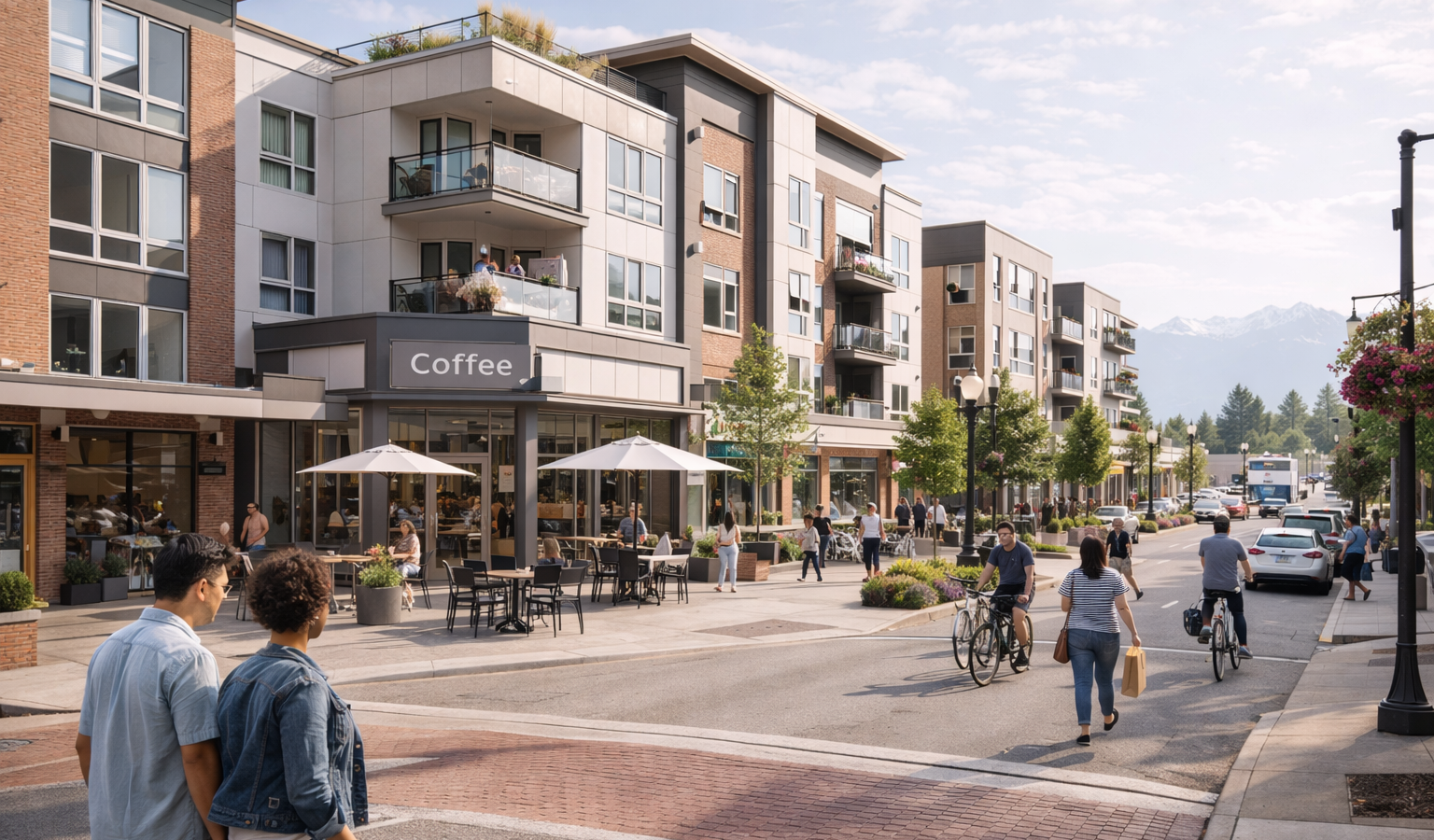
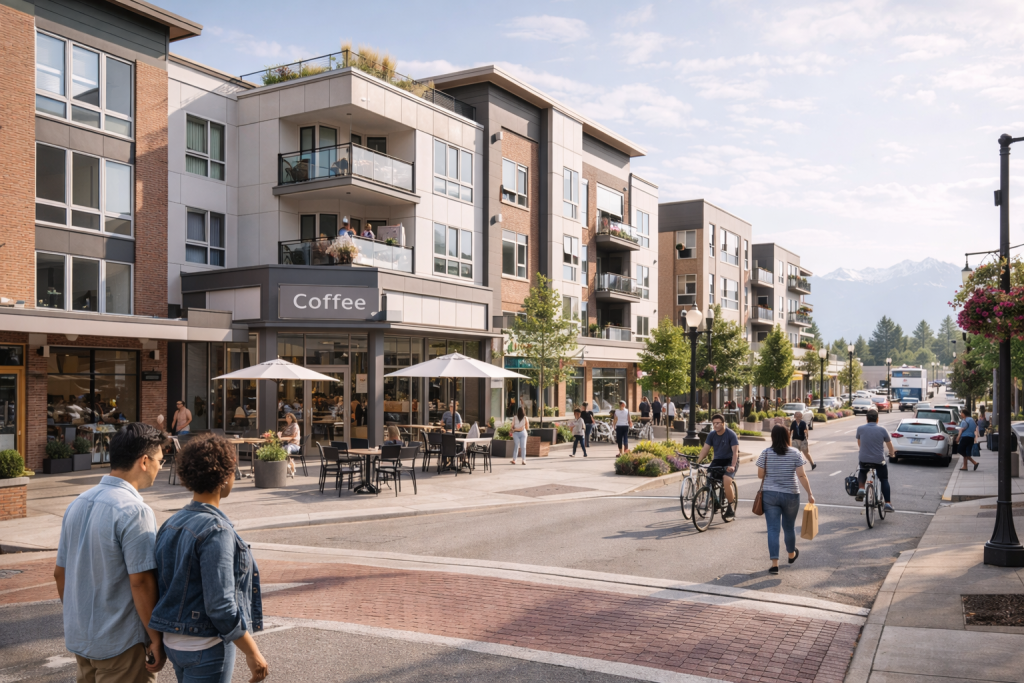
Rather than separating functions into distant zones, mixed-use projects integrate them within walkable districts. Consequently, residents can access essential services without relying heavily on cars.
The Urban Land Institute notes that mixed-use environments often generate stronger long-term value because they diversify income streams and enhance neighborhood vibrancy.
Urbanization and Density Pressures
One of the strongest real estate trends supporting mixed-use development is continued urbanization. As cities attract population growth, land scarcity becomes more pronounced.
In high-demand areas, single-use zoning limits efficient land utilization. Mixed-use projects maximize vertical and horizontal space by stacking complementary functions within one footprint.
For example, residential towers may sit above retail spaces, while office floors occupy mid-level sections. This layered approach allows cities to accommodate more residents and businesses without expanding outward.
Moreover, density supports economic resilience. When commercial and residential uses coexist, local spending circulates within the community, strengthening neighborhood economies.
Changing Work Patterns and Hybrid Models
The shift toward hybrid and remote work has transformed office demand. Traditional central business districts have experienced fluctuating occupancy rates.
As a result, developers are reconsidering how office space integrates with residential areas. Mixed-use environments provide flexibility. Office floors can be adapted into co-working hubs or converted into residential units if demand shifts.
Brookings Institution research highlights the importance of adaptive reuse in post-pandemic urban recovery. Mixed-use projects enable dynamic responses to evolving workforce trends.
Additionally, residents increasingly value proximity to work. Even hybrid workers prefer reduced commuting times. Mixed-use communities address this preference by blending employment and housing options within walking distance.
Lifestyle Preferences and Walkability
Lifestyle priorities are central to real estate trends supporting mixed-use development. Younger generations, in particular, prioritize convenience, community, and accessibility.
Walkable neighborhoods reduce reliance on cars and encourage healthier living. Access to parks, shops, and services within short distances enhances quality of life.
The National Association of Realtors has reported that walkability significantly influences homebuyer decisions. Mixed-use districts naturally align with these preferences.
Furthermore, integrated environments promote social interaction. Public plazas, shared courtyards, and communal gathering spaces foster connection among residents and visitors.
Retail Reinvention Within Mixed-Use Spaces
Retail has undergone major transformation due to e-commerce growth. Standalone shopping centers have struggled in many regions.
However, retail integrated within mixed-use developments often performs differently. Ground-floor shops benefit from built-in residential and office foot traffic. Restaurants and service-based businesses thrive on consistent local demand.
Rather than relying solely on destination shopping, mixed-use retail supports daily convenience. Grocery stores, pharmacies, and small boutiques meet immediate needs, creating steady economic flow.
Developers are also incorporating experiential retail—such as fitness studios and cultural venues—to attract visitors beyond transactional shopping.
Sustainability and Environmental Efficiency
Environmental concerns are influencing development patterns. Mixed-use projects reduce transportation emissions by placing daily services within walking distance.
In addition, centralized energy systems and shared infrastructure improve efficiency. Sustainable building certifications increasingly favor compact, multi-use environments.
The U.S. Green Building Council emphasizes that integrated land use planning reduces environmental impact compared to dispersed development. By minimizing urban sprawl, mixed-use districts preserve surrounding natural areas.
Moreover, public transit integration enhances sustainability outcomes. Many mixed-use projects are located near rail stations or major bus corridors, reinforcing transit-oriented development strategies.
Financial Diversification and Investment Appeal
From an investment perspective, mixed-use projects provide diversified revenue streams. Rental income from residential units can offset fluctuations in office or retail performance.
This diversification reduces exposure to sector-specific downturns. For example, if office demand weakens, residential occupancy may remain strong.
Institutional investors increasingly view mixed-use assets as resilient long-term holdings. According to data from major real estate investment firms, portfolio diversification within a single property enhances stability.
However, mixed-use financing can be complex. Development costs are often higher due to design integration and regulatory approvals. Therefore, strong feasibility analysis and phased planning are critical.
Zoning Reform and Policy Support
Local governments are revisiting zoning policies to accommodate mixed-use growth. Traditional single-use zoning can limit flexibility and hinder adaptive reuse.
Cities aiming to revitalize downtown districts often encourage mixed-use through density bonuses or streamlined permitting processes. These policy adjustments align infrastructure investment with housing and commercial demand.
The American Planning Association highlights the importance of flexible land-use frameworks in supporting sustainable urban growth. Coordinated policy encourages private investment while maintaining community standards.
Challenges and Risk Considerations
Despite advantages, mixed-use development is not without challenges. Integration requires careful design coordination. Noise management, traffic flow, and privacy considerations must be addressed.
Construction costs can exceed those of single-use buildings. Complex structural requirements, such as reinforced foundations for retail loads beneath residential units, increase budgets.
Additionally, economic cycles may impact different components unevenly. Retail performance may decline during downturns, affecting overall cash flow projections.
Therefore, thorough market analysis is essential before project initiation. Developers must evaluate demographic trends, local employment patterns, and consumer behavior.
Suburban Mixed-Use Expansion
While historically associated with urban cores, mixed-use development is expanding into suburban markets. As suburban communities seek to reduce car dependence, town-center style projects are emerging.
These suburban mixed-use districts often include mid-rise apartments, office suites, and retail promenades. They aim to create community hubs that reduce long commutes and enhance local identity.
This trend reflects broader shifts in housing demand. Families and professionals increasingly seek environments that combine suburban space with urban convenience.
Long-Term Outlook
Real estate trends supporting mixed-use development are likely to continue evolving as demographic and economic conditions shift. Population growth, climate considerations, and infrastructure investments will shape future projects.
Technological integration may further enhance mixed-use viability. Smart building systems, shared mobility hubs, and digital management platforms improve operational efficiency.
Moreover, aging populations may influence design features. Accessibility-focused planning and healthcare integration could become standard components.
Ultimately, mixed-use development reflects a broader real estate transition toward flexibility and community-centered design. Rather than separating residential, commercial, and recreational functions, integrated environments respond to modern expectations for convenience and connectivity.
As cities and suburbs adapt to changing work habits and sustainability priorities, mixed-use projects offer adaptable frameworks for balanced growth. Their success will depend on thoughtful planning, financial discipline, and responsive policy environments.
Real estate trends supporting mixed-use development demonstrate how the built environment continues to evolve alongside social and economic transformation.
References
Urban Land Institute – Mixed-Use Development Research: https://www.uli.org
Brookings Institution – Downtown Recovery and Adaptive Reuse: https://www.brookings.edu
National Association of Realtors – Community and Walkability Reports: https://www.nar.realtor
U.S. Green Building Council – Sustainable Urban Planning: https://www.usgbc.org