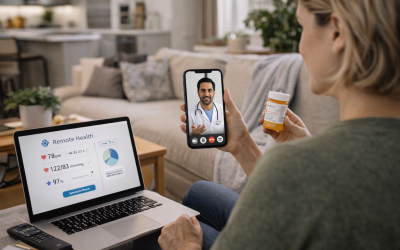
Mental Health Resources Expanding Digitally is one of the most significant developments in modern healthcare. Over the past decade—and especially in recent years—technology has transformed how individuals access therapy, crisis support, mindfulness tools, and psychiatric services. What once required in-person appointments and limited local options is increasingly available through smartphones, laptops, and connected devices.

Digital platforms now offer video therapy sessions, AI-powered mental health chatbots, peer support communities, mood tracking apps, and structured cognitive behavioral therapy (CBT) programs. This expansion is not simply about convenience; it reflects broader efforts to reduce stigma, close access gaps, and make mental health support more scalable.
In this article, we examine why mental health resources expanding digitally is accelerating, what forms these tools take, and what opportunities and challenges lie ahead.
Why Mental Health Resources Expanding Digitally Is Gaining Momentum
Several global forces are driving this transformation.
First, mental health needs are increasing. The World Health Organization estimates that anxiety and depression affect hundreds of millions of people worldwide (World Health Organization – Mental Health Overview: https://www.who.int/news-room/fact-sheets/detail/mental-disorders). Despite growing awareness, access to traditional in-person care remains uneven across regions.
Second, stigma reduction has encouraged more people to seek help. Digital platforms provide privacy and discretion, which can be particularly important in communities where mental health conversations are still sensitive.
Third, advances in telecommunication technology have improved the quality of remote interaction. High-speed internet, secure video platforms, and encrypted communication tools make virtual care increasingly viable.
Together, these factors explain why mental health resources expanding digitally has become central to global health strategy discussions.
Teletherapy and Virtual Counseling
Teletherapy is perhaps the most visible example of digital expansion in mental health care.
Video-based therapy sessions allow individuals to connect with licensed professionals without geographic constraints. According to the American Psychological Association, telepsychology has grown significantly, particularly following periods of restricted in-person services (American Psychological Association – Telehealth Guidance: https://www.apa.org).
Benefits of teletherapy include:
- Reduced travel time
- Increased scheduling flexibility
- Access to specialists outside local regions
- Continuity of care during relocation
For many clients, virtual sessions feel comparable to in-person appointments, particularly when supported by secure platforms.
Mental Health Apps and Self-Guided Tools
Mobile applications now provide structured mental health support outside formal therapy sessions.
These apps may offer:
- Guided meditation exercises
- Cognitive behavioral therapy modules
- Mood tracking journals
- Sleep improvement tools
- Stress management programs
The National Institute of Mental Health notes that digital tools can complement traditional care but should be evaluated carefully for quality and evidence-based foundations (National Institute of Mental Health – Digital Mental Health: https://www.nimh.nih.gov).
Self-guided tools are particularly useful for individuals seeking preventative strategies or supplementary support between therapy sessions.
AI and Chat-Based Mental Health Support
Artificial intelligence is increasingly integrated into digital mental health platforms.
AI-powered chatbots can:
- Provide guided coping strategies
- Offer mood check-ins
- Deliver structured cognitive exercises
- Direct users to crisis resources when necessary
While AI cannot replace licensed professionals, it can serve as an accessible first layer of support. In some cases, chat-based tools help users articulate concerns before seeking formal therapy.
The integration of AI reflects a broader digital health trend: scaling support while maintaining human oversight where needed.
Online Peer Support Communities
Digital forums and peer support networks have become central components of mental health ecosystems.
Online communities allow individuals to:
- Share lived experiences
- Exchange coping strategies
- Reduce feelings of isolation
- Access diverse perspectives
Research published by the National Institutes of Health highlights the value of peer support in enhancing emotional resilience and reducing stigma (National Institutes of Health – Peer Support Research: https://www.nih.gov).
However, moderation and professional oversight remain important to ensure safe and constructive dialogue.
Workplace Integration of Digital Mental Health
Corporate environments are increasingly incorporating digital mental health platforms into employee benefit packages.
Companies now offer:
- Subscription-based therapy services
- Virtual resilience workshops
- Digital stress management tools
- Confidential counseling hotlines
The Society for Human Resource Management reports that employer-sponsored mental health benefits have expanded significantly in recent years (SHRM – Workplace Mental Health Trends: https://www.shrm.org).
Digital accessibility makes it easier for employees to seek support discreetly and efficiently.
Accessibility and Equity Considerations
While mental health resources expanding digitally improves access for many, digital equity remains a concern.
Challenges include:
- Limited internet access in rural areas
- Device affordability
- Language barriers
- Digital literacy gaps
Ensuring equitable access requires infrastructure investment and culturally sensitive design.
Digital tools should complement—not replace—community-based services, especially in underserved regions.
Data Privacy and Ethical Concerns
Digital expansion introduces new ethical considerations.
Mental health data is highly sensitive. Platforms must prioritize:
- Secure encryption
- Transparent data policies
- Clear consent frameworks
- Compliance with health privacy regulations
Users should review privacy terms carefully before engaging with digital platforms.
Regulatory oversight continues evolving to address these concerns while encouraging innovation.
The Role of Hybrid Care Models
Many mental health professionals now use hybrid models that combine in-person and digital care.
Hybrid approaches allow:
- Initial in-person assessments
- Ongoing virtual sessions
- Digital homework assignments
- Remote progress tracking
This flexibility enhances continuity while preserving personal connection where necessary.
Hybrid care may become the standard rather than the exception in future mental health systems.
Practical Guidance for Individuals
For individuals considering digital mental health resources, several steps can improve outcomes:
Verify Credentials
Ensure therapists are licensed and accredited.
Assess Evidence Base
Choose apps supported by research or clinical expertise.
Review Privacy Policies
Understand how personal information is stored and used.
Balance Digital and Human Interaction
Use digital tools to supplement, not replace, professional care when needed.
Monitor Personal Response
Evaluate whether the platform genuinely improves well-being.
Informed selection is essential to maximizing benefits while minimizing risks.
The Future of Digital Mental Health
Looking ahead, mental health resources expanding digitally are likely to become more personalized and integrated.
Emerging developments may include:
AI-driven early intervention tools
Wearable-based stress monitoring
Virtual reality exposure therapy
Integrated telepsychiatry and medication management
Culturally adaptive digital therapy modules
As innovation continues, collaboration between clinicians, technologists, and policymakers will be critical to maintaining safety and effectiveness.
Conclusion
Mental Health Resources Expanding Digitally represents a fundamental shift in how psychological support is delivered and accessed. Digital platforms have increased flexibility, reduced stigma, and expanded reach to populations that previously faced significant barriers to care.
While challenges remain—particularly regarding privacy, equity, and quality assurance—the potential for scalable, accessible mental health support is significant. Digital tools are not replacing traditional therapy; they are broadening the ecosystem of care.
As technology evolves, thoughtful implementation will determine whether digital mental health resources fulfill their promise of improving well-being on a global scale. With responsible design and user awareness, digital expansion can strengthen—not dilute—the human foundation of mental health care.
References
World Health Organization – Mental Disorders Fact Sheet: https://www.who.int/news-room/fact-sheets/detail/mental-disorders
American Psychological Association – Telehealth and Telepsychology Guidance: https://www.apa.org
National Institute of Mental Health – Digital Mental Health Resources: https://www.nimh.nih.gov
National Institutes of Health – Peer Support Research: https://www.nih.gov
Society for Human Resource Management – Workplace Mental Health Trends: https://www.shrm.org