
Artificial intelligence is no longer limited to large enterprises with expansive research budgets. Today, AI trends influencing small business operations are transforming how entrepreneurs manage marketing, customer service, inventory, finance, and decision-making. What was once considered advanced automation is now accessible through affordable software platforms, cloud-based tools, and subscription services designed specifically for smaller organizations.
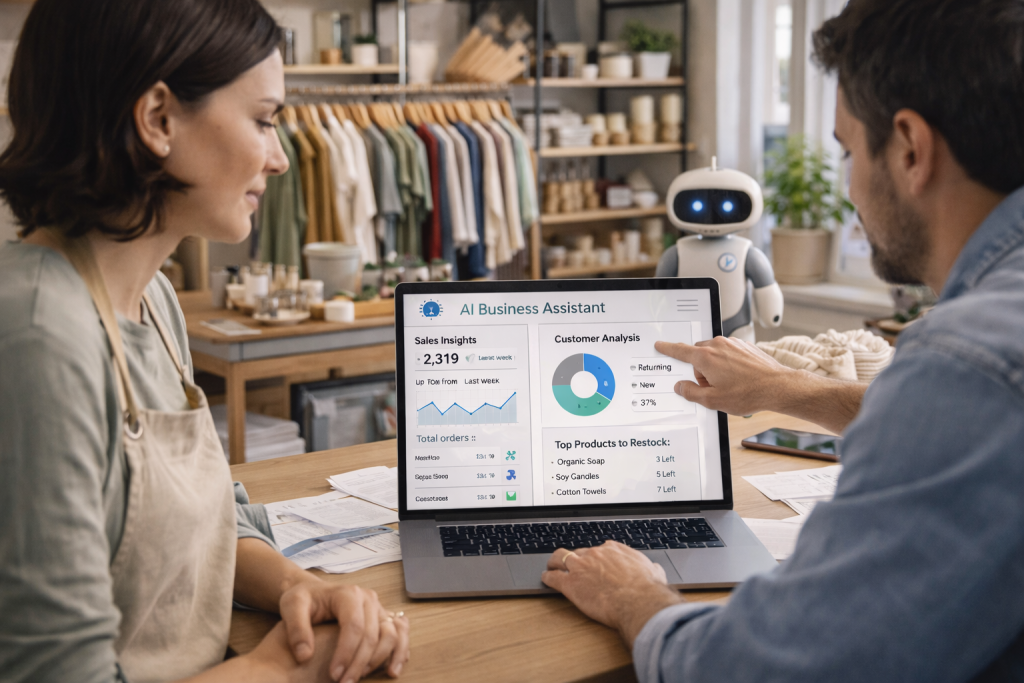
For small businesses, AI adoption is not about replacing human expertise. Instead, it is about increasing efficiency, improving customer experience, and making data-driven decisions without expanding payroll costs. As competition intensifies across industries, AI is becoming a strategic equalizer that enables small firms to compete with larger corporations.
Understanding the most important AI trends influencing small business operations can help owners evaluate opportunities while managing risks responsibly.
Automation of Routine Administrative Tasks
One of the most immediate AI benefits for small businesses is workflow automation. Repetitive tasks such as appointment scheduling, invoice processing, email filtering, and document management can now be handled by AI-driven systems.
Automation reduces time spent on administrative overhead, allowing business owners to focus on growth initiatives. For example, AI-powered accounting platforms can categorize expenses, reconcile transactions, and generate financial reports automatically.
According to a report from Deloitte on AI adoption in business, automation is often the first entry point for small organizations because it delivers measurable efficiency gains without complex infrastructure changes.
In addition, customer relationship management systems now integrate AI to prioritize leads, track communication patterns, and recommend follow-up timing. These improvements enhance productivity without increasing operational complexity.
AI-Powered Customer Support
Customer service has become one of the most visible AI trends influencing small business operations. Chatbots and virtual assistants are now widely used to respond to frequently asked questions, schedule services, and provide real-time order updates.
Unlike traditional call centers, AI chat systems operate continuously. This availability improves responsiveness while lowering staffing costs.
Small businesses benefit particularly from AI-driven support tools because they often lack large customer service departments. Automated responses handle routine inquiries, while human staff focus on complex cases requiring personal attention.
Research from McKinsey & Company highlights how AI-enabled customer interactions improve satisfaction when combined with human oversight. The key is balancing automation with empathy.
Data-Driven Marketing and Personalization
Marketing strategies are evolving rapidly. AI tools analyze customer behavior, website traffic, and purchasing history to deliver targeted campaigns.
Email marketing platforms now use predictive analytics to determine optimal sending times and subject lines. Social media management tools analyze engagement data and recommend content adjustments.
AI trends influencing small business operations increasingly include hyper-personalization. Customers expect tailored recommendations and relevant offers. AI enables small firms to segment audiences efficiently without hiring data analysts.
For example, retail businesses can use AI-driven systems to suggest complementary products based on prior purchases. Service providers can customize promotions based on user behavior patterns.
The Harvard Business Review notes that personalization strategies driven by AI often increase conversion rates and customer loyalty.
Inventory and Supply Chain Optimization
Managing inventory can be challenging for small retailers and e-commerce sellers. Overstocking ties up capital, while understocking leads to missed sales opportunities.
AI-powered forecasting tools analyze historical sales data, seasonal trends, and external factors such as weather or regional demand patterns. These systems generate purchasing recommendations that minimize waste and optimize cash flow.
Supply chain visibility has also improved through AI integration. Small businesses can track shipments in real time and anticipate disruptions. This level of insight was once reserved for large logistics operations.
As global supply chains become more complex, AI trends influencing small business operations increasingly focus on resilience and predictive planning.
Financial Management and Risk Analysis
Financial decision-making is another area where AI adoption is accelerating. AI-driven accounting platforms provide cash flow forecasts and alert business owners to potential liquidity issues before they escalate.
Credit risk assessment tools also use AI algorithms to evaluate lending applications. This technology allows small businesses to access financing more quickly and with more transparent evaluation processes.
The World Economic Forum has highlighted how AI enhances financial inclusion by improving credit assessment models for smaller enterprises.
In addition, fraud detection systems monitor transactions and identify anomalies in real time. For small businesses with limited internal controls, automated fraud prevention reduces vulnerability.
Workforce Management and HR Tools
Human resources functions are increasingly supported by AI tools. Recruitment platforms now use AI to screen resumes, identify skill matches, and schedule interviews automatically.
Performance management systems analyze productivity metrics and suggest training opportunities. AI-based workforce planning tools also help predict staffing needs based on sales forecasts and seasonal patterns.
For small businesses with lean teams, these tools streamline HR processes and reduce administrative burden. However, transparency and fairness in algorithmic decision-making remain essential considerations.
Generative AI for Content Creation
Generative AI tools are transforming how small businesses produce marketing content. AI systems can draft blog posts, product descriptions, advertising copy, and email campaigns.
This trend significantly reduces content production costs. Instead of outsourcing every campaign, small teams can generate first drafts internally and refine them to align with brand voice.
Graphic design and video editing tools powered by AI further enhance creative capacity. These platforms allow small businesses to produce professional-quality visuals without specialized training.
While generative AI increases efficiency, human oversight remains critical. Brand authenticity and factual accuracy require careful review before publication.
Cybersecurity and Risk Mitigation
As digital adoption increases, cybersecurity risks also rise. Small businesses are frequent targets of cyberattacks due to perceived vulnerabilities.
AI-powered security systems monitor network activity and detect unusual patterns. Automated threat detection tools identify potential breaches faster than manual oversight.
According to IBM’s cybersecurity reports, AI-based threat detection significantly reduces response time to cyber incidents. For small businesses with limited IT resources, automated protection is especially valuable.
Investing in AI-driven security measures strengthens operational continuity and customer trust.
Ethical Considerations and Responsible Adoption
Although AI trends influencing small business operations offer substantial benefits, ethical considerations must be addressed. Data privacy, algorithmic bias, and transparency are critical issues.
Small businesses must ensure compliance with data protection regulations and maintain clear communication with customers about how data is used. Responsible AI adoption builds long-term credibility.
Training employees to understand AI limitations also prevents overreliance. AI tools support decision-making, but final accountability remains human.
Cost Accessibility and Scalability
One reason AI adoption is accelerating among small businesses is cost accessibility. Cloud-based subscription models eliminate the need for expensive hardware investments.
Scalable platforms allow businesses to start with basic features and expand functionality as they grow. This flexibility aligns well with evolving operational needs.
Additionally, many AI tools integrate seamlessly with existing software ecosystems. This reduces implementation barriers and training complexity.
Future Outlook for Small Business AI
Looking ahead, AI trends influencing small business operations are likely to deepen integration across functions. Voice-enabled assistants may handle scheduling and reporting tasks. Predictive analytics will become more precise as data volumes grow.
Collaborative AI systems may assist in strategic planning by simulating business scenarios. Meanwhile, improvements in natural language processing will enhance customer interaction quality.
However, success will depend on balanced adoption. Small businesses that combine technological efficiency with human creativity and relationship-building will likely gain the most value.
AI is not replacing entrepreneurship. Instead, it is augmenting it. By leveraging automation, analytics, and intelligent systems, small businesses can operate with agility and insight previously limited to larger organizations.
Ultimately, AI trends influencing small business operations reflect a broader shift toward data-driven, adaptive business models. As technology continues evolving, small enterprises have unprecedented opportunities to compete, innovate, and grow sustainably.
References
Deloitte – State of AI in the Enterprise: https://www2.deloitte.com
McKinsey & Company – AI and Customer Experience: https://www.mckinsey.com
World Economic Forum – AI and Financial Inclusion: https://www.weforum.org
IBM – Cost of a Data Breach Report: https://www.ibm.com