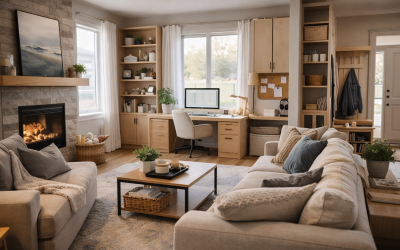
Homes are no longer designed around fixed routines. Work, study, exercise, entertainment, and rest increasingly happen within the same square footage. As lifestyles evolve, so do design priorities. Today, interior trends supporting flexible spaces are reshaping residential and commercial environments to adapt quickly to changing needs.
Flexibility is no longer considered a bonus feature. It has become a central design principle. Whether in compact urban apartments or larger suburban homes, occupants expect rooms to serve multiple functions without sacrificing comfort or aesthetics. Designers, architects, and homeowners are responding with adaptable layouts, modular furniture, and intelligent storage systems.
Understanding interior trends supporting flexible spaces reveals how modern design balances practicality, comfort, and long-term usability.
The Shift Toward Multi-Functional Living
Historically, homes were organized around clearly defined rooms: dining room, living room, study, and bedroom. However, remote work and hybrid schedules have blurred these boundaries.
The pandemic accelerated the need for adaptable interiors. Kitchens became offices. Bedrooms doubled as study areas. Living rooms transformed into fitness zones. Even as routines stabilize, the demand for flexibility remains strong.
According to research from the American Institute of Architects, residential design increasingly prioritizes multi-purpose rooms and convertible layouts. This shift reflects long-term behavioral change rather than temporary adaptation.
Interior trends supporting flexible spaces therefore emphasize adaptability over rigid formality.
Modular Furniture and Convertible Design
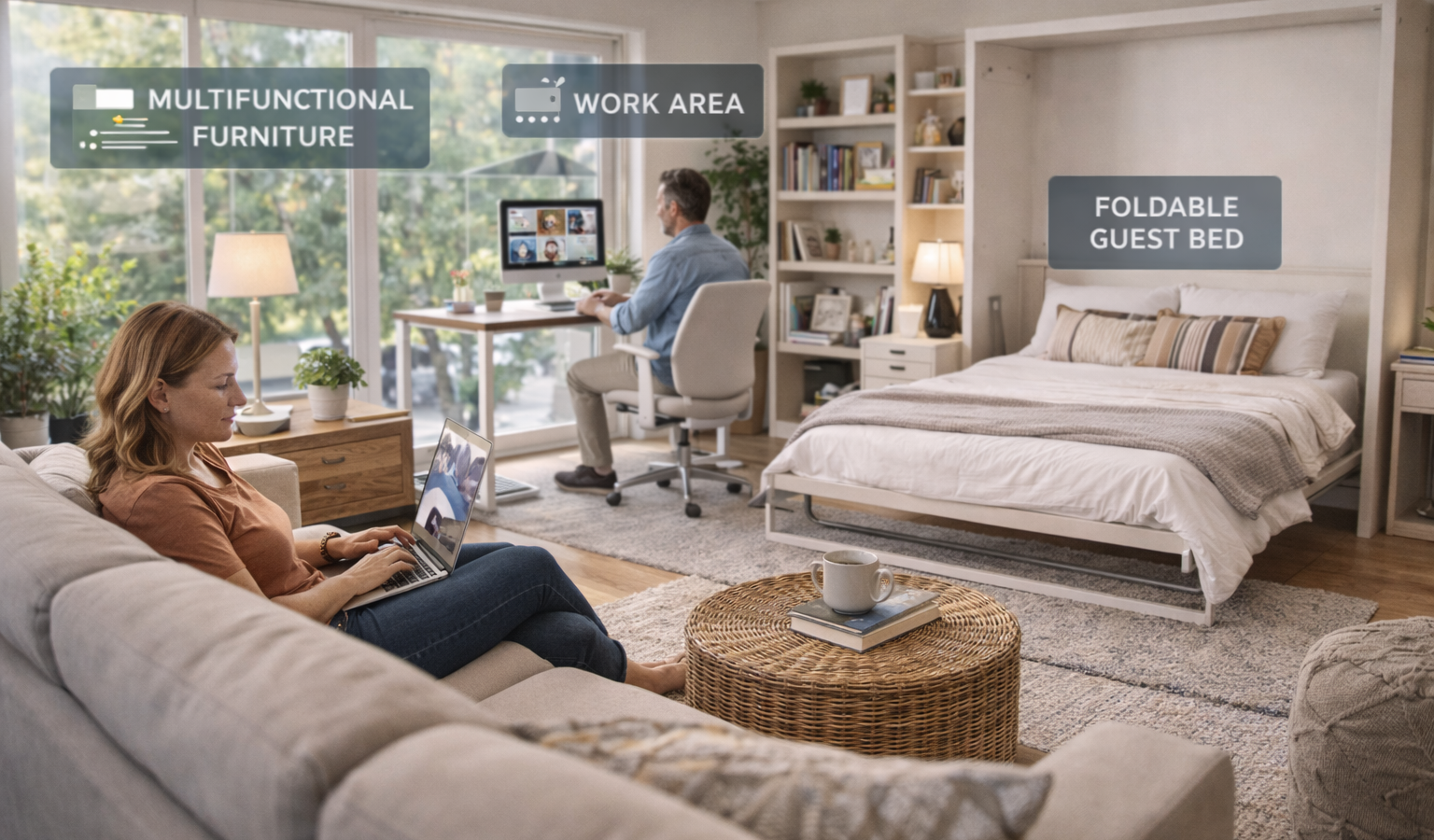
Furniture innovation plays a central role in flexible interiors. Modular seating, foldable desks, wall-mounted tables, and expandable dining surfaces enable quick spatial reconfiguration.
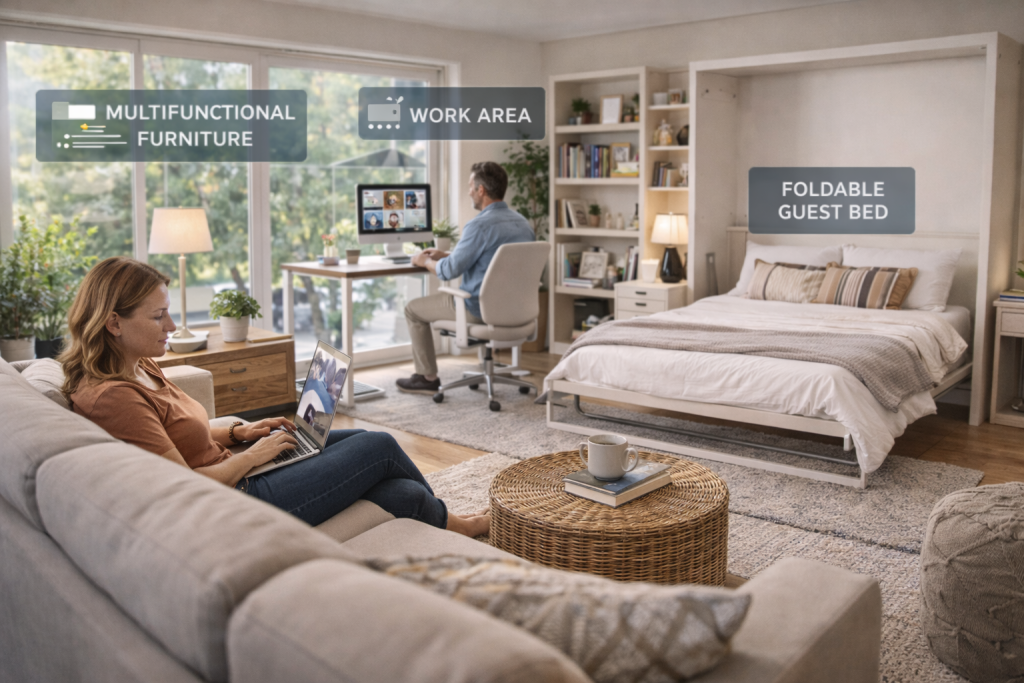
Convertible sofas that transform into guest beds, extendable shelving units, and stackable seating options maximize usability in limited space. These pieces allow homeowners to adapt rooms within minutes.
Manufacturers increasingly focus on durable materials and streamlined mechanisms to ensure that flexibility does not compromise comfort.
Interior trends supporting flexible spaces often combine aesthetic simplicity with mechanical functionality. Minimalist forms make reconfiguration seamless rather than visually disruptive.
Sliding Partitions and Movable Walls
Permanent walls restrict adaptability. Sliding panels, pocket doors, and folding partitions provide privacy when needed while preserving openness.
For example, a home office area can remain integrated with a living space during the day and separated during virtual meetings. In commercial settings, conference rooms can expand or contract depending on attendance.
The International Interior Design Association highlights movable partitions as a key tool in adaptive design. By adjusting spatial boundaries, occupants control acoustics, light flow, and social interaction.
Flexible partition systems also reduce the need for structural renovation when needs change over time.
Integrated Storage Solutions
Clutter undermines flexibility. When rooms serve multiple purposes, efficient storage becomes essential.
Built-in cabinetry, hidden compartments, under-bed drawers, and vertical shelving systems allow belongings to remain organized and out of sight.
Interior trends supporting flexible spaces emphasize integrated storage that blends with architectural elements. Wall-to-wall cabinetry and concealed shelving maintain clean visual lines while supporting functional needs.
Smart storage planning ensures that transitioning from work mode to leisure mode requires minimal effort.
Adaptable Lighting Design
Lighting influences how spaces function throughout the day. Adjustable lighting systems support varied activities within the same room.
Layered lighting—combining ambient, task, and accent fixtures—enables transitions from focused work to relaxed evening environments. Dimmable LEDs and smart lighting controls provide customizable brightness and color temperature.
The U.S. Department of Energy notes that LED technology improves energy efficiency while offering design versatility.
Interior trends supporting flexible spaces integrate lighting systems that respond to shifting tasks and moods without requiring structural changes.
Biophilic Design and Natural Adaptability
Flexibility also includes psychological comfort. Incorporating natural elements enhances adaptability by supporting mental well-being across different activities.
Biophilic design integrates plants, natural textures, and daylight access. These features create calming environments suitable for both productivity and relaxation.
Studies referenced by the World Green Building Council indicate that natural light and greenery improve cognitive performance and reduce stress.
Interior trends supporting flexible spaces increasingly merge functionality with biophilic principles, ensuring that adaptability does not compromise comfort.
Open-Plan Layouts with Defined Zones
Open-plan design remains popular, but complete openness can create noise and distraction. Modern flexible layouts use subtle zoning techniques to define functional areas within shared spaces.
Area rugs, ceiling treatments, furniture placement, and varied flooring materials visually distinguish work zones from leisure zones.
This approach maintains openness while preventing spatial ambiguity. Instead of permanent walls, visual cues provide organization.
Designers emphasize proportion and balance to avoid overcrowding while preserving adaptability.
Technology Integration
Smart home systems enhance spatial flexibility. Wireless devices, cloud-connected printers, and portable monitors allow workstations to move easily between rooms.
Smart thermostats and automated window treatments adjust environmental conditions according to occupancy patterns.
The Consumer Technology Association highlights increased adoption of smart home technology across residential markets.
Interior trends supporting flexible spaces often incorporate concealed wiring and adaptable connectivity hubs to reduce visible clutter and support seamless transitions.
Sustainable and Durable Materials
Flexibility requires durability. Furniture and surfaces that experience frequent reconfiguration must withstand repeated use.
Engineered wood, recycled composites, and resilient textiles provide long-term performance while supporting sustainability goals.
The Ellen MacArthur Foundation emphasizes the importance of circular design in reducing material waste. Modular components that can be repaired or replaced individually extend product lifespan.
Interior trends supporting flexible spaces therefore intersect with sustainability priorities, ensuring that adaptability does not generate excessive waste.
Flexible Spaces in Small Apartments
Urban density continues rising in many cities. Smaller living spaces require thoughtful flexibility to remain functional.
Murphy beds, fold-out desks, and ceiling-mounted storage maximize vertical space. Compact dining areas may convert into workspace during the day.
Designers often use neutral color palettes and reflective surfaces to enhance perceived openness.
Flexible design in small apartments demonstrates that limited square footage does not limit usability when adaptability is prioritized.
Commercial and Co-Working Environments
Flexibility extends beyond residential spaces. Offices increasingly incorporate adaptable meeting rooms, hot-desking systems, and modular lounge areas.
Hybrid work models require offices to support collaboration rather than fixed individual workstations.
Movable whiteboards, reconfigurable seating, and flexible conference layouts enable dynamic team interaction.
Interior trends supporting flexible spaces in commercial settings focus on scalability and efficient use of square footage.
Planning for Future Life Stages
Flexible design also supports long-term adaptability. As families grow or age, spatial needs evolve.
Convertible guest rooms can become nurseries or hobby spaces. Adjustable countertop heights and accessible layouts support aging in place.
Designing with future transitions in mind reduces the need for costly renovations later.
Flexible interiors anticipate change rather than react to it.
Long-Term Outlook
As work patterns and lifestyle expectations continue evolving, demand for adaptable interiors is unlikely to decline.
Urban housing constraints, economic uncertainty, and technological innovation will further reinforce flexibility as a central design principle.
Architects and interior designers are increasingly incorporating flexibility into foundational layouts rather than treating it as an afterthought.
Interior trends supporting flexible spaces reflect a broader cultural shift toward dynamic living environments that respond to changing routines.
Conclusion
Interior trends supporting flexible spaces demonstrate how design adapts to modern living demands. From modular furniture and movable partitions to integrated storage and smart technology, flexibility has become a defining feature of contemporary interiors.
Rather than dedicating rooms to singular functions, homeowners and designers are embracing adaptability, ensuring that spaces evolve alongside lifestyle changes.
By combining durability, sustainability, and thoughtful layout planning, flexible interiors offer long-term value and resilience. As living and working patterns continue to shift, adaptable design will remain central to creating environments that support productivity, comfort, and well-being across life stages.
References
American Institute of Architects – Residential Design Trends: https://www.aia.org
International Interior Design Association – Flexible Workplace Insights: https://www.iida.org
U.S. Department of Energy – LED Lighting and Efficiency: https://www.energy.gov
Ellen MacArthur Foundation – Circular Design Principles: https://www.ellenmacarthurfoundation.org