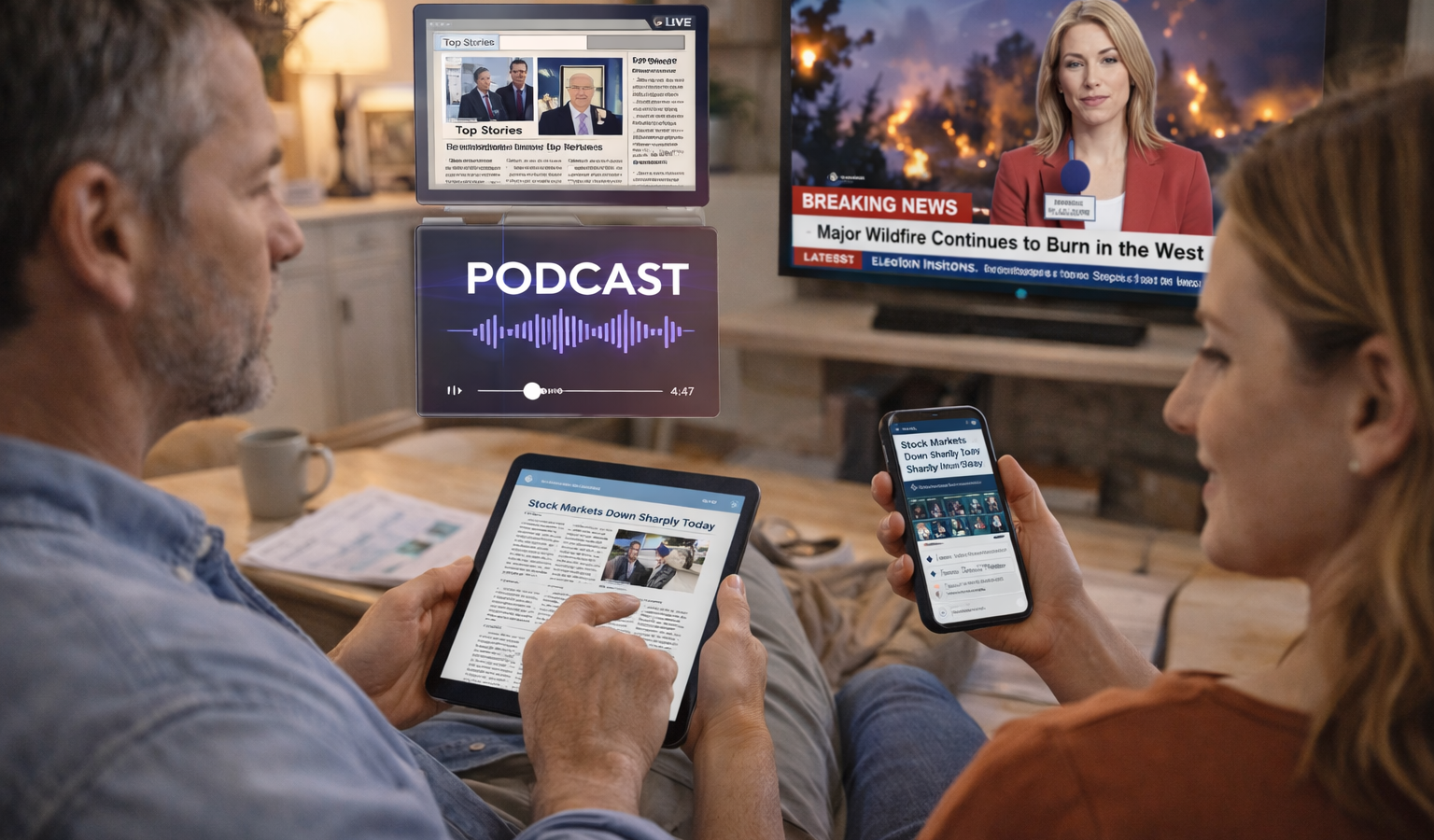
The way people consume news has transformed dramatically over the past decade. Traditional print subscriptions and scheduled television broadcasts are no longer the primary gateways to information. Instead, smartphones, social platforms, podcasts, newsletters, and algorithm-driven feeds dominate daily news habits. As a result, digital media trends influencing news consumption are reshaping journalism, audience behavior, and public discourse.
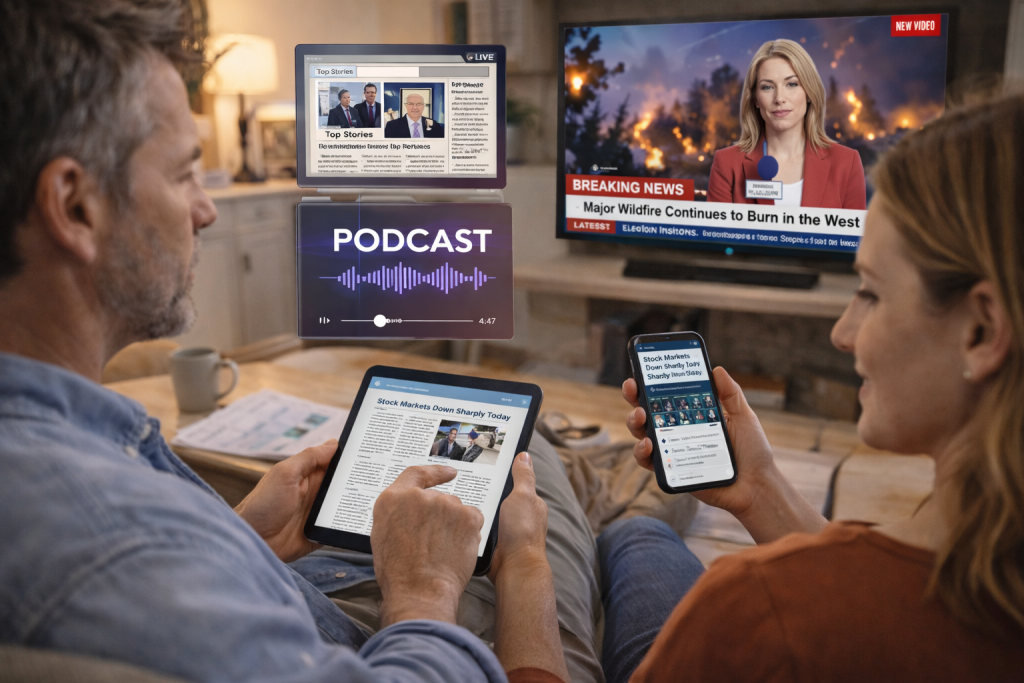
News is now available instantly, personalized to individual interests, and distributed across multiple digital channels. While this accessibility expands reach, it also raises questions about credibility, misinformation, and information overload. Understanding digital media trends influencing news consumption is essential for media organizations, policymakers, and readers navigating a rapidly evolving information landscape.
The Shift to Mobile-First News
Mobile devices have become the central access point for news consumption. Smartphones allow users to check headlines, watch live updates, and receive push notifications throughout the day.
According to the Pew Research Center, a majority of adults in many countries now access news primarily through mobile devices rather than desktop computers or print formats. This shift has influenced both how content is produced and how it is structured.
Mobile-first design emphasizes shorter paragraphs, visual storytelling, and fast-loading formats. News organizations prioritize responsive layouts and app-based distribution to meet audience expectations.
Digital media trends influencing news consumption increasingly reflect the dominance of mobile accessibility and on-demand information.
Social Media as a News Gateway
Social media platforms have become powerful news distributors. Many users encounter headlines through curated feeds rather than directly visiting news websites.
Platforms such as Facebook, X, Instagram, and TikTok host content shared by publishers, influencers, and independent creators. Algorithms personalize feeds based on engagement patterns, increasing exposure to content aligned with individual preferences.
The Reuters Institute Digital News Report consistently finds that social media plays a major role in how younger audiences discover news. However, reliance on algorithmic feeds raises concerns about echo chambers and misinformation.
Digital media trends influencing news consumption therefore include both increased accessibility and greater fragmentation of information sources.
The Growth of Short-Form Video
Short-form video has emerged as a significant driver of news engagement. Platforms that emphasize brief, visually dynamic clips are attracting younger audiences who prefer quick summaries over long-form articles.
Newsrooms have adapted by producing explainer videos, live streams, and behind-the-scenes content optimized for vertical viewing.
The rise of video-based consumption changes storytelling approaches. Visual cues, captions, and concise scripting become central to delivering information effectively.
This shift reflects broader digital media trends influencing news consumption, where attention spans are shaped by scrolling behaviors and interactive formats.
Podcasts and Audio Journalism
While short-form content dominates social feeds, long-form audio journalism is also expanding. Podcasts allow for in-depth analysis, investigative storytelling, and expert interviews.
Listeners can engage with news while commuting, exercising, or performing daily tasks. This flexibility enhances accessibility and creates loyal audience segments.
According to Edison Research, podcast listenership continues to grow steadily, particularly among younger demographics.
Audio journalism represents a complementary dimension of digital media trends influencing news consumption, combining convenience with depth.
Subscription Models and Direct Audience Relationships
As advertising revenue fluctuates, many news organizations are shifting toward subscription-based models. Digital paywalls, premium newsletters, and membership programs create direct financial relationships between publishers and readers.
This model encourages content quality and reduces reliance on algorithmic visibility. Subscribers often value investigative reporting and specialized coverage.
The Reuters Institute notes that digital subscription growth has become a central revenue strategy for many established news brands.
Digital media trends influencing news consumption therefore include a redefinition of audience engagement, emphasizing loyalty and trust over pure traffic volume.
Personalization and Algorithmic Curation
Artificial intelligence plays a growing role in shaping news feeds. Algorithms analyze reading history, search behavior, and engagement metrics to recommend articles.
Personalization increases relevance but may limit exposure to diverse perspectives. Filter bubbles can reinforce existing viewpoints, influencing public discourse.
Technology companies and publishers continue refining recommendation systems to balance relevance with content diversity.
Digital media trends influencing news consumption are closely tied to algorithmic decision-making, raising ongoing debates about transparency and editorial responsibility.
Misinformation and Trust Challenges
The speed and scale of digital distribution have intensified misinformation risks. False or misleading stories can spread rapidly through social networks.
Organizations such as UNESCO emphasize the importance of media literacy in combating misinformation. Fact-checking initiatives and content moderation policies aim to preserve information integrity.
Trust in media institutions varies across regions. According to the Edelman Trust Barometer, public confidence in traditional media has fluctuated in recent years.
Digital media trends influencing news consumption highlight the importance of verifying sources and strengthening journalistic standards.
Citizen Journalism and User-Generated Content
Digital platforms enable individuals to share news events in real time. During breaking stories, eyewitness videos and social posts often surface before official reports.
Citizen journalism expands coverage diversity but also requires careful verification. Professional newsrooms frequently collaborate with user contributors while applying editorial standards.
This democratization of information production is one of the defining digital media trends influencing news consumption. Audiences are no longer passive recipients; they actively contribute to news cycles.
The Role of Newsletters and Niche Communities
Email newsletters have experienced renewed popularity. Curated briefings provide direct delivery of headlines without reliance on social algorithms.
Many journalists now operate independent newsletters focused on specialized topics such as technology policy, climate change, or financial markets.
Niche communities foster deeper engagement and focused discussion. Readers often prefer targeted analysis over broad coverage.
These subscription-based ecosystems illustrate how digital media trends influencing news consumption are diversifying audience pathways.
Interactive and Data-Driven Storytelling
Digital tools enable interactive graphics, real-time dashboards, and data visualization. Readers can explore datasets, customize views, and access dynamic updates.
Interactive storytelling enhances comprehension of complex issues such as election results or economic indicators.
The integration of data visualization tools reflects evolving audience expectations for clarity and transparency.
Digital media trends influencing news consumption increasingly prioritize engagement and interpretive support rather than static reporting.
Regional and Global Access Expansion
Digital platforms expand news access in regions where traditional print distribution may be limited. Smartphones and mobile networks enable global information exchange.
The International Telecommunication Union reports steady growth in internet penetration across developing regions.
However, disparities remain in broadband availability and digital literacy. Addressing these gaps is essential for equitable news access.
Attention Economy and Information Overload
Constant notifications and endless scrolling can contribute to information fatigue. Many users report feeling overwhelmed by continuous updates.
In response, some consumers are adopting selective consumption habits, including limited notification settings or scheduled news review times.
News organizations are experimenting with digest formats and curated summaries to reduce overload.
Long-Term Outlook
Looking ahead, emerging technologies such as augmented reality and artificial intelligence may further transform news delivery. Immersive storytelling could allow readers to explore events through interactive simulations.
At the same time, regulatory frameworks around platform accountability and data privacy are evolving. These policies will shape distribution models and algorithmic transparency.
As digital ecosystems mature, trust, credibility, and accessibility will remain defining factors. News organizations that combine technological innovation with journalistic integrity are likely to maintain audience engagement.
Conclusion
Digital media trends influencing news consumption reflect a profound transformation in how information is accessed, shared, and evaluated. Mobile devices, social platforms, podcasts, and subscription models have diversified pathways to news, while algorithmic personalization reshapes audience exposure.
These developments increase accessibility and engagement but also introduce challenges related to misinformation, trust, and information overload. As technology continues evolving, responsible journalism and informed readership will remain central to maintaining a healthy information ecosystem.
Understanding digital media trends influencing news consumption is essential for navigating a media environment defined by speed, personalization, and constant connectivity. The future of news will depend on balancing innovation with credibility and accessibility with accountability.
References
Pew Research Center – News Consumption Research: https://www.pewresearch.org
Reuters Institute for the Study of Journalism – Digital News Report: https://www.reutersinstitute.politics.ox.ac.uk
UNESCO – Media and Information Literacy: https://www.unesco.org
International Telecommunication Union – Internet Usage Statistics: https://www.itu.int