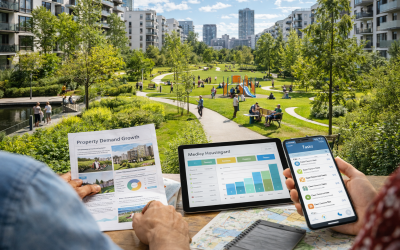
Urban populations are expanding rapidly across both developed and emerging economies. As employment hubs diversify, infrastructure improves, and migration patterns shift, housing markets are adjusting accordingly. Among the most closely watched indicators in real estate today are rental demand trends in growing cities, which reveal how affordability pressures, lifestyle preferences, and demographic changes are reshaping urban living.

Growing cities—whether regional technology centers, logistics corridors, university towns, or revitalized downtown districts—are experiencing measurable shifts in tenant behavior. Rising home prices, delayed homeownership, remote work flexibility, and population inflows are all contributing to increased rental demand.
Understanding rental demand trends in growing cities provides insight not only for investors and developers, but also for policymakers seeking to balance affordability with sustainable growth.
Population Growth and Urban Migration
Population growth remains one of the strongest drivers of rental demand. As cities expand economically, they attract workers, students, and entrepreneurs seeking opportunity.
In many regions, internal migration from rural or smaller towns into metropolitan areas continues steadily. Additionally, international migration contributes to housing demand in global gateway cities.
According to the United Nations Department of Economic and Social Affairs, urban populations are projected to increase significantly over the coming decades, particularly in Asia and Africa. This demographic shift places sustained pressure on rental markets in expanding urban centers.
However, not all growth is concentrated in traditional megacities. Mid-sized cities with emerging industries are also capturing significant inflows, reshaping rental demand patterns beyond historic hubs.
Delayed Homeownership and Affordability Constraints
Rising home prices and higher mortgage interest rates have pushed homeownership further out of reach for many households. Consequently, renting remains a practical and often necessary alternative.
Rental demand trends in growing cities show that younger households are renting for longer periods before considering home purchases. Student loan debt, stricter lending standards, and economic uncertainty contribute to delayed entry into ownership markets.
The Joint Center for Housing Studies of Harvard University reports that cost burdens are rising among renters in many metropolitan areas. Despite affordability challenges, renting often requires lower upfront financial commitment than purchasing.
As a result, sustained demand for rental housing is expected in cities where property values continue to climb faster than income growth.
The Rise of Amenity-Driven Rentals
Modern renters are increasingly prioritizing convenience and lifestyle features. In growing cities, newly developed rental communities often include amenities such as fitness centers, co-working spaces, rooftop terraces, and integrated retail.
These features reflect broader lifestyle shifts. Hybrid work arrangements encourage renters to value in-building workspace and reliable connectivity. Social spaces also enhance community engagement in densely populated environments.
Rental demand trends in growing cities demonstrate that renters are willing to pay premiums for properties that combine location, convenience, and functionality. Developers are responding by incorporating mixed-use elements within residential complexes.
This amenity-driven approach also supports longer tenant retention rates.
Remote Work and Secondary City Growth
The expansion of remote and hybrid work models has influenced geographic flexibility. Workers no longer need to reside exclusively in primary financial centers.
Consequently, secondary cities with lower living costs and improving infrastructure are experiencing rising rental demand. These markets often offer more affordable units while maintaining access to employment opportunities through digital connectivity.
Research from McKinsey & Company indicates that migration flows during recent years favored mid-sized cities offering quality of life benefits alongside career flexibility.
Rental demand trends in growing cities therefore include both large metropolitan expansion and rising demand in regional hubs.
Student Populations and University Expansion
Higher education institutions play a central role in shaping local rental markets. University expansions and international student inflows contribute to sustained housing demand.
Purpose-built student accommodation is becoming more common in growing cities with strong academic institutions. These developments often provide furnished units, communal spaces, and short-term lease options aligned with academic calendars.
In addition, graduates frequently remain in cities after completing studies, contributing to workforce expansion and longer-term rental demand.
This demographic segment often favors centrally located apartments with proximity to transit and employment centers.
Infrastructure Development and Transit Access
Public infrastructure investment significantly influences rental demand patterns. Improved transit systems, expanded highways, and new commercial developments enhance neighborhood accessibility.
Rental demand trends in growing cities often follow transit corridors. Properties located near rail stations or major bus lines typically experience stronger occupancy rates and rental growth.
The World Bank emphasizes that infrastructure investment can stimulate economic development and urban expansion. Housing markets respond accordingly, with rental demand concentrating in newly connected districts.
Infrastructure improvements also reduce commuting times, increasing neighborhood attractiveness for renters seeking convenience.
Supply Constraints and Construction Challenges
While demand continues rising in many growing cities, supply constraints remain persistent challenges. Zoning restrictions, limited land availability, and construction cost inflation slow new housing delivery.
When supply fails to match demand growth, rental prices often increase. This dynamic can create affordability pressures and encourage policy interventions such as rent stabilization or housing subsidies.
Developers face balancing acts between profitability and affordability. High land costs and material expenses influence project feasibility.
Rental demand trends in growing cities therefore depend not only on demographic growth but also on regulatory frameworks and construction pipelines.
Short-Term Rentals and Market Dynamics
Short-term rental platforms have also influenced housing availability in some cities. When residential units are converted into vacation rentals, long-term rental supply may decrease.
This shift can intensify demand pressures, particularly in tourism-heavy markets. Policymakers in several cities have introduced regulations to manage short-term rental growth and preserve housing stock for residents.
The Organisation for Economic Co-operation and Development highlights the importance of balanced housing policy to maintain affordability while supporting tourism.
Understanding these regulatory dynamics is essential when analyzing rental demand trends in growing cities.
Demographic Diversity and Lifestyle Preferences
Growing cities often attract diverse populations, including young professionals, immigrants, retirees, and entrepreneurs. Each demographic group contributes distinct rental preferences.
Young professionals typically favor urban cores with vibrant social scenes. Families may seek larger units in transit-connected suburban neighborhoods. Retirees may prioritize healthcare access and walkability.
This diversity encourages developers to create varied housing types, including micro-units, family-oriented apartments, and mixed-income communities.
Rental demand trends in growing cities reflect this segmentation, with no single housing model dominating entirely.
Economic Cycles and Resilience
Economic conditions strongly influence rental markets. During economic downturns, homeownership rates may decline as households postpone purchases, increasing rental demand.
Conversely, job losses can reduce household formation rates, moderating demand growth temporarily.
However, historically, rental housing has demonstrated relative resilience compared to for-sale markets during uncertain economic periods.
Institutional investors increasingly recognize rental properties in growing cities as stable income-generating assets, particularly when supported by strong employment bases.
Sustainability and Energy Efficiency
Sustainability considerations are becoming more prominent in rental development. Energy-efficient buildings reduce operating costs and appeal to environmentally conscious renters.
Green certifications and smart home technologies enhance property value while supporting climate objectives.
As environmental awareness grows, rental demand trends in growing cities increasingly align with sustainable construction practices.
Long-Term Outlook
Looking ahead, rental demand in expanding urban markets is expected to remain strong. Continued population growth, delayed homeownership, and economic restructuring support sustained occupancy levels.
However, affordability will remain a critical concern. Policymakers may expand incentives for affordable housing construction or implement zoning reforms to encourage higher-density development.
Technology integration, infrastructure investment, and diversified housing supply will shape the next phase of urban rental growth.
Ultimately, rental demand trends in growing cities reflect broader social and economic transformations. As cities evolve into more dynamic, digitally connected environments, rental housing will continue playing a central role in accommodating diverse populations.
Conclusion
Rental demand trends in growing cities are shaped by population expansion, affordability constraints, infrastructure development, and shifting lifestyle preferences. As homeownership becomes less accessible for many households, renting remains a primary housing solution in both major metropolitan areas and emerging regional hubs.
Developers and policymakers must balance demand growth with sustainable supply strategies to prevent excessive cost burdens. Investment in transit, mixed-use development, and energy-efficient housing will further influence market trajectories.
While economic cycles may create short-term fluctuations, the long-term outlook suggests continued demand for well-located rental housing in expanding urban centers. Understanding these trends allows stakeholders to make informed decisions that support both economic resilience and housing stability.
References
United Nations Department of Economic and Social Affairs – World Urbanization Prospects: https://www.un.org
Joint Center for Housing Studies of Harvard University – Rental Housing Report: https://www.jchs.harvard.edu
McKinsey & Company – Urban Migration and Housing Trends: https://www.mckinsey.com
Organisation for Economic Co-operation and Development – Housing Policy Analysis: https://www.oecd.org