Smart Lighting Systems Supporting Productivity are becoming a defining feature of modern workspaces, educational environments, and even home offices. As organizations rethink how physical spaces influence performance and well-being, lighting has moved beyond simple illumination. Today’s smart systems integrate sensors, automation, and circadian-based design principles to optimize focus, reduce fatigue, and support cognitive performance.
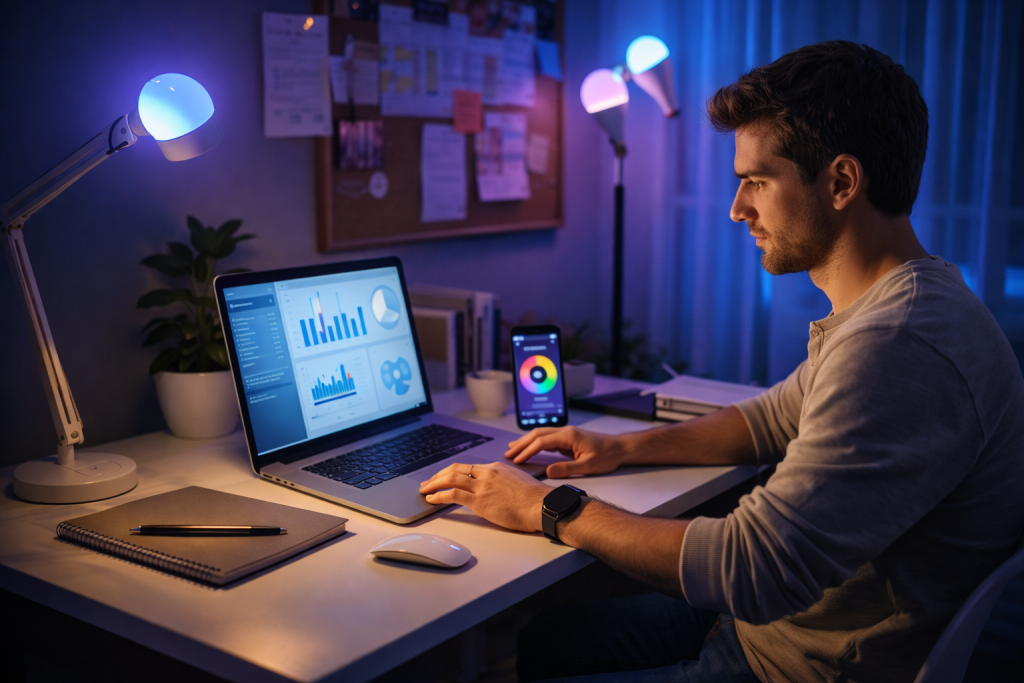
Lighting affects more than visibility. It influences mood, alertness, sleep cycles, and overall efficiency. Advances in LED technology, Internet of Things (IoT) connectivity, and adaptive lighting controls have enabled environments that respond dynamically to user needs and time of day.
In this article, we examine how smart lighting systems supporting productivity are reshaping workplaces, what science says about light and performance, and what to consider when implementing these technologies.
Why Smart Lighting Systems Supporting Productivity Matter
The relationship between light and human performance is well-documented. Exposure to appropriate lighting conditions influences circadian rhythms—the internal biological clock regulating sleep and wake cycles.
The National Institutes of Health has reported that light exposure, particularly blue-enriched light during daytime hours, plays a significant role in regulating alertness and cognitive function (National Institutes of Health – Circadian Rhythms and Light: https://www.nih.gov).
Poor lighting conditions can contribute to:
- Eye strain
- Fatigue
- Reduced concentration
- Headaches
- Decreased morale
In contrast, optimized lighting environments can improve attention span and workplace satisfaction.
Circadian Lighting and Human-Centric Design
A major advancement in smart lighting systems supporting productivity is circadian lighting.
Circadian lighting adjusts color temperature and brightness throughout the day to align with natural daylight patterns. For example:
- Cooler, blue-enriched light in the morning to enhance alertness
- Neutral white light during peak work hours
- Warmer tones in the late afternoon to support relaxation
The Lighting Research Center at Rensselaer Polytechnic Institute has emphasized the importance of dynamic lighting systems in supporting biological rhythms (Lighting Research Center – Human-Centric Lighting Research: https://www.lrc.rpi.edu).
This approach reduces the mismatch between indoor artificial lighting and natural daylight cycles, helping regulate energy levels.
Adaptive and Sensor-Based Automation
Modern smart lighting systems integrate motion sensors, occupancy detection, and daylight harvesting.
Key capabilities include:
- Automatic dimming when natural light increases
- Lights turning off in unoccupied rooms
- Personalized brightness levels for individual workstations
- Energy consumption tracking
Automation not only supports productivity but also improves energy efficiency. According to the U.S. Department of Energy, LED and smart lighting technologies significantly reduce energy use compared to traditional lighting systems (U.S. Department of Energy – Lighting Efficiency: https://www.energy.gov).
In corporate settings, reduced glare and customized brightness contribute to sustained focus.
Impact on Workplace Performance
Research published in occupational health studies suggests that optimized lighting environments can enhance employee engagement and reduce absenteeism.
Improved lighting conditions have been associated with:
- Higher task accuracy
- Faster reaction times
- Reduced visual fatigue
- Improved mood stability
Harvard T.H. Chan School of Public Health has highlighted the role of environmental design—including lighting—in cognitive function and workplace performance (Harvard T.H. Chan – Healthy Buildings Research: https://www.hsph.harvard.edu).
While lighting alone cannot determine productivity outcomes, it contributes meaningfully to environmental quality.
Smart Lighting in Remote and Hybrid Work
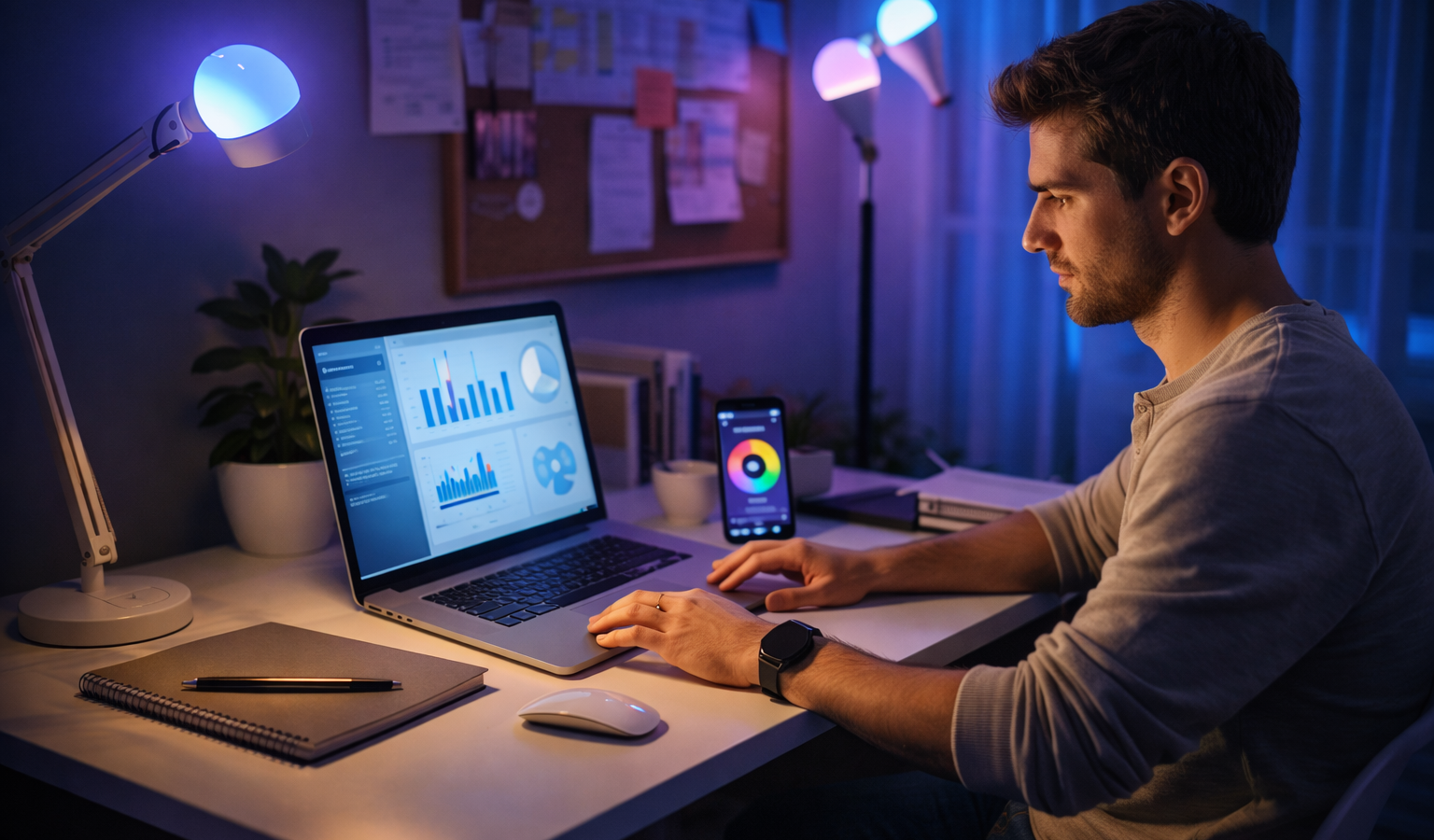
As hybrid work models expand, smart lighting systems are increasingly adopted in home offices.
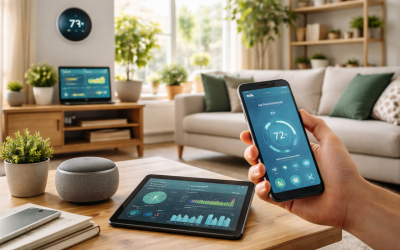
Remote workers often struggle with inconsistent lighting conditions, particularly when working in multi-purpose spaces. Smart bulbs and app-controlled systems allow individuals to:
- Adjust brightness based on task type
- Shift color temperature for video calls
- Set scheduled lighting changes
- Reduce screen glare
Personal control enhances comfort and perceived productivity, especially during long work sessions.
Educational and Institutional Applications
Smart lighting systems supporting productivity are also expanding in educational settings.
Classrooms that integrate adaptive lighting systems may improve student focus and reduce restlessness. Studies conducted in school environments suggest that dynamic lighting can support learning outcomes and attention span.
Educational institutions are increasingly investing in lighting modernization as part of broader sustainability and performance initiatives.
Integration with Building Management Systems
In commercial environments, smart lighting often connects with broader building management systems.
Integration allows coordination with:
- HVAC systems
- Security systems
- Occupancy analytics
- Energy dashboards
Centralized monitoring improves operational efficiency while supporting employee comfort.
IoT-enabled lighting networks generate real-time data that facility managers can use to optimize workspace utilization.
Sustainability and Energy Savings
Beyond productivity, smart lighting systems deliver environmental benefits.
Energy-efficient LEDs combined with automated controls reduce electricity consumption. The International Energy Agency notes that lighting accounts for a significant portion of global electricity use, making efficiency improvements impactful (International Energy Agency – Energy Efficiency Reports: https://www.iea.org).
Reduced energy demand supports corporate sustainability goals and long-term cost savings.
Challenges and Considerations
Despite their advantages, smart lighting systems present challenges.
Upfront Costs
Initial installation and infrastructure upgrades may require significant investment.
Complex Configuration
Improper calibration can reduce effectiveness.
User Adaptation
Employees may require guidance to optimize settings.
Cybersecurity Risks
Connected lighting networks must be protected against vulnerabilities.
Thoughtful implementation and user education are essential for maximizing benefits.
Practical Tips for Implementing Smart Lighting
Organizations considering smart lighting systems should:
Conduct Lighting Audits
Evaluate current conditions and energy usage.
Prioritize Human-Centric Design
Align lighting schedules with natural circadian patterns.
Enable Personal Control
Allow individuals to adjust brightness and color temperature.
Integrate with Sustainability Goals
Track energy savings and environmental impact.
Provide Training
Educate employees about optimal lighting use.
Strategic deployment enhances both performance and cost-effectiveness.
The Future of Smart Lighting
Looking ahead, smart lighting systems supporting productivity are likely to become even more personalized.
Emerging developments may include:
AI-driven lighting adjustments based on biometric data
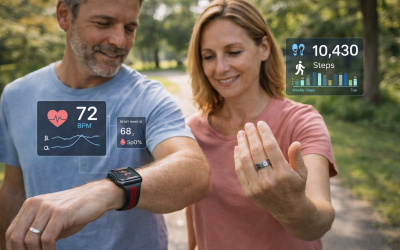
Integration with wearable devices
Adaptive lighting based on task recognition
Voice-controlled environmental customization
Enhanced analytics for workplace optimization
As technology evolves, lighting will increasingly function as an intelligent environmental system rather than a static utility.
Conclusion
Smart Lighting Systems Supporting Productivity represent a significant advancement in workplace and home office design. By aligning artificial lighting with human biological rhythms and enabling adaptive automation, these systems contribute to improved focus, reduced fatigue, and greater energy efficiency.
While lighting alone cannot guarantee performance gains, it plays a measurable role in shaping cognitive outcomes and overall well-being. Organizations and individuals who invest in thoughtful lighting design are better positioned to create environments that support sustained productivity.
As workplaces continue adapting to hybrid models and sustainability goals, smart lighting will likely remain a key component of intelligent building strategies.
References
National Institutes of Health – Circadian Rhythms and Light Exposure: https://www.nih.gov
Lighting Research Center – Human-Centric Lighting Research: https://www.lrc.rpi.edu
U.S. Department of Energy – Lighting Energy Efficiency: https://www.energy.gov
Harvard T.H. Chan School of Public Health – Healthy Buildings Research: https://www.hsph.harvard.edu
International Energy Agency – Energy Efficiency Reports: https://www.iea.org