In 2026, stress is no longer an invisible health factor-it’s measurable. From wrist-based sensors to smart rings and biometric patches, health wearables tracking stress indicators are transforming how individuals monitor and manage mental strain in real time. What began as simple step-counting devices has evolved into sophisticated tools capable of analyzing heart rate variability, sleep cycles, skin temperature, and electrodermal activity to estimate physiological stress levels.
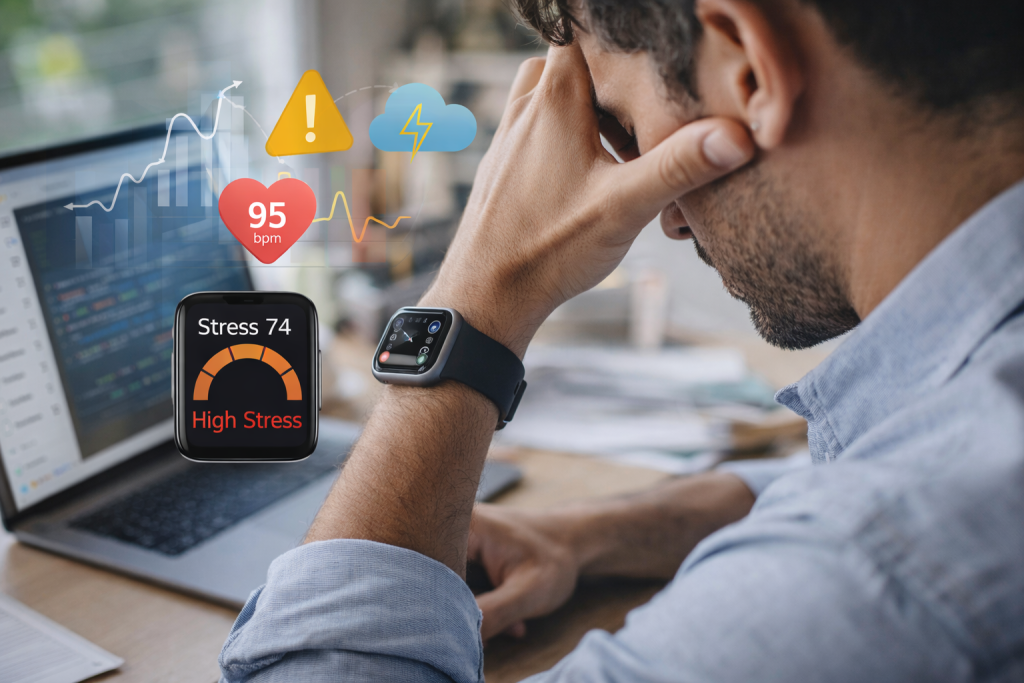
As work patterns shift, digital overload increases, and global uncertainty persists, stress management has become a daily priority. Wearable technology is stepping in not as a replacement for clinical care, but as a preventative tool-offering insights that were once limited to research labs.
The rapid adoption of health wearables tracking stress indicators signals a broader shift toward proactive wellness, where data empowers behavior change.
Why Stress Tracking Is Becoming Mainstream
Stress is linked to a range of health outcomes, including cardiovascular risk, sleep disorders, and immune function changes. The World Health Organization recognizes stress as a significant factor influencing global health burdens, particularly in working-age populations.
Meanwhile, surveys from the American Psychological Association consistently show high reported stress levels related to work, finances, and health concerns.
As awareness grows, consumers are looking for tools that help them identify stress patterns before they escalate into burnout or chronic health issues.
Wearables provide continuous, passive monitoring-something traditional checkups cannot replicate.
How Health Wearables Track Stress Indicators
Unlike subjective self-reporting, wearables rely on physiological markers. Most devices analyze a combination of the following metrics:
1. Heart Rate Variability (HRV)
HRV measures the variation in time between heartbeats. Higher variability often reflects better resilience and recovery, while lower HRV can indicate stress or fatigue.
Many wearables use HRV as a core stress indicator.
2. Resting Heart Rate
Elevated resting heart rate over extended periods can signal chronic stress or insufficient recovery.
3. Electrodermal Activity (EDA)
Also known as galvanic skin response, EDA measures subtle changes in sweat gland activity linked to nervous system activation.
Devices such as those developed by Fitbit incorporate EDA sensors to assess stress responses.
4. Sleep Quality Metrics
Poor sleep often correlates with stress. Wearables track sleep stages and disruptions to assess recovery.
5. Skin Temperature and Movement Patterns
Subtle temperature fluctuations and nighttime restlessness can indicate physiological strain.
By combining these data points, algorithms estimate daily stress levels and provide trend analysis over time.
Leading Companies in Stress-Tracking Wearables
Several major players are shaping the landscape of health wearables tracking stress indicators:
Apple
The Apple Watch integrates HRV tracking, mindfulness prompts, and respiratory rate monitoring. With watchOS updates, Apple continues expanding mental health-related features.
Garmin
Garmin devices provide “Body Battery” metrics-an algorithm combining HRV, sleep, and activity to estimate energy reserves and stress load.
Oura
Oura offers ring-based monitoring that tracks HRV, temperature trends, and sleep cycles, providing readiness scores based on stress and recovery data.
WHOOP
WHOOP focuses heavily on recovery analytics, offering strain and stress insights widely adopted by athletes and professionals seeking performance optimization.
These brands highlight how stress tracking has become central-not secondary-to wearable design.
The Science Behind Wearable Stress Monitoring
While wearables provide convenience, the scientific basis rests primarily on autonomic nervous system activity. HRV research published through the National Institutes of Health supports the connection between HRV patterns and stress resilience.
When the sympathetic nervous system (fight-or-flight response) dominates, HRV tends to decrease. Conversely, parasympathetic activity supports recovery and higher variability.
Wearables interpret HRV fluctuations as signals of stress load, though they do not diagnose medical conditions.
Benefits of Tracking Stress in Real Time
1. Pattern Awareness
Users often discover stress triggers tied to:
• Work meetings
• Sleep deprivation
• Travel
• Intense workouts
• Social interactions
Identifying these patterns allows for behavioral adjustments.
2. Recovery Optimization
Athletes and high-performance professionals use stress data to plan rest days, ensuring physical strain does not exceed recovery capacity.
3. Mindfulness Reinforcement
Many devices integrate guided breathing exercises triggered by elevated stress readings.
4. Preventative Insight
While not clinical tools, stress-tracking wearables encourage earlier intervention through lifestyle changes.
Integration With Mental Health Apps
Wearables increasingly sync with meditation and therapy platforms, providing contextual data for reflection.
For example:
• Sleep disruptions trigger mindfulness suggestions
• High stress alerts recommend breathing exercises
• Weekly summaries encourage habit adjustments
This ecosystem approach links biometric data with behavioral support.
Corporate Wellness and Workplace Adoption
Some employers are exploring wearable programs to encourage healthier work habits. Corporate wellness initiatives may offer voluntary stress monitoring devices combined with wellness coaching.
However, this trend raises important privacy considerations.
Privacy and Data Security Concerns
Health wearables tracking stress indicators collect sensitive biometric data. Consumers must consider:
• Data storage policies
• Third-party sharing agreements
• Employer access to health metrics
• Regulatory compliance
The Federal Trade Commission has issued guidance emphasizing transparency in digital health data practices.
Users should review privacy settings carefully and understand data governance policies before adoption.
Limitations of Stress Tracking Wearables
Despite rapid innovation, stress-tracking wearables have limitations:
1. Not Diagnostic Tools
They estimate physiological stress, not psychological diagnosis.
2. Algorithm Variability
Different brands use proprietary algorithms, leading to inconsistent readings across devices.
3. Context Blindness
Wearables detect physiological signals but cannot interpret emotional context accurately.
4. Over-Reliance Risk
Constant monitoring may increase anxiety for some users.
Responsible use involves viewing wearables as informational tools rather than definitive health assessments.
Behavioral Changes Driven by Stress Data
Many users report tangible lifestyle adjustments after reviewing wearable data:
• Improved sleep routines
• Reduced late-night screen time
• Scheduled breaks during workdays
• Structured exercise recovery
• Intentional breathing practices
When used constructively, stress-tracking devices reinforce healthier daily patterns.
The Future of Stress Monitoring
Emerging developments include:
• Continuous cortisol monitoring research
• Integration with AI-driven mental health coaching
• Real-time biofeedback wearables
• Smart clothing with embedded sensors
Researchers are exploring ways to refine accuracy while maintaining comfort and accessibility.
Advances in biosensor miniaturization may soon enable even more granular monitoring without bulky hardware.
The Role of AI in Stress Prediction
AI-driven analytics enhance wearable insights by identifying subtle correlations over time.
Machine learning models analyze:
• Sleep consistency
• Activity fluctuations
• Environmental variables
• Heart rhythm patterns
These models may eventually predict stress spikes before they occur, offering preventative prompts.
Consumer Trends in 2026
Market growth continues steadily. Demand is expanding beyond athletes to:
• Corporate professionals
• Students
• Healthcare workers
• Parents
• Shift workers
As stress awareness increases, wearables are becoming mainstream health companions rather than niche fitness gadgets.
Balancing Technology With Human Awareness
While health wearables tracking stress indicators provide valuable data, human awareness remains essential. Self-reflection, therapy, physical activity, and social connection cannot be replaced by metrics alone.
The most effective use of wearable stress tracking combines:
• Data review
• Professional guidance when needed
• Sustainable lifestyle changes
• Realistic expectations
Technology supports awareness-but does not substitute comprehensive care.
Conclusion
Health wearables tracking stress indicators are reshaping how individuals understand and manage daily strain. By translating physiological signals into actionable insights, these devices empower users to detect patterns, adjust routines, and prioritize recovery.
As biosensor technology advances and AI integration deepens, wearable stress monitoring will likely become even more precise and personalized. However, thoughtful adoption-paired with privacy awareness and balanced expectations-remains essential.
Stress may be unavoidable in modern life, but increasingly, it is measurable. And with measurement comes the opportunity for proactive management.
References
World Health Organization – Mental Health and Stress: https://www.who.int
American Psychological Association – Stress in America Report: https://www.apa.org
National Institutes of Health – Heart Rate Variability Research: https://www.ncbi.nlm.nih.gov
Federal Trade Commission – Health App Privacy and Data Security: https://www.ftc.gov