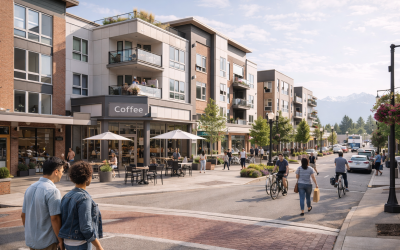
Public infrastructure spending influencing housing demand has become a defining factor in real estate markets across the globe. Roads, rail systems, broadband networks, schools, water systems, and green spaces do more than improve quality of life. They directly affect where people choose to live, how much they are willing to pay, and how developers plan new housing projects.

As governments respond to economic slowdowns, climate goals, and population growth, infrastructure investment is accelerating in many regions. At the same time, housing affordability remains a central concern. The interaction between infrastructure expansion and residential demand is therefore shaping urban and suburban development in powerful ways.
Understanding how public infrastructure spending influencing housing demand works can help investors, policymakers, and households make informed decisions in an increasingly complex property market.
The Link Between Infrastructure and Property Values
Infrastructure improves accessibility. When new transit lines, highways, or bus networks connect previously isolated neighborhoods to employment centers, commuting times decrease. As a result, these areas become more attractive to buyers and renters.
Research from the Organisation for Economic Co-operation and Development shows that improved transportation infrastructure often leads to measurable increases in nearby property values. This relationship is particularly strong in growing metropolitan regions where congestion limits mobility.
In addition, educational and healthcare infrastructure can influence family housing decisions. New schools, hospitals, and community facilities increase neighborhood appeal. Consequently, demand for housing in those zones tends to rise.
However, this effect is not uniform. The scale, quality, and timing of infrastructure projects all shape market outcomes.
Transportation Projects and Housing Market Shifts
Transportation investment remains one of the most visible drivers of housing demand. Rail extensions, subway upgrades, and rapid bus systems expand the practical boundaries of cities.
When a new transit station is announced, property speculation often begins immediately. Developers purchase land in anticipation of future demand. Buyers, meanwhile, expect long-term appreciation.
For example, studies published by the Urban Institute indicate that proximity to high-capacity transit corridors correlates with increased housing construction and higher property prices. As a result, areas once considered peripheral can become prime residential zones within a few years.
Nevertheless, rapid appreciation can create affordability challenges. While infrastructure attracts investment, it may also displace lower-income residents if housing supply does not expand quickly enough.
Broadband and Digital Infrastructure
Public infrastructure spending influencing housing demand is no longer limited to roads and rail. Digital connectivity has become equally important. High-speed broadband enables remote work, online education, and digital entrepreneurship.
During the pandemic, regions with reliable broadband experienced increased migration from urban centers. Households sought larger homes in suburban or rural areas while maintaining employment through remote work.
According to the Federal Reserve’s research on regional economic development, broadband expansion contributes to housing growth in smaller communities by reducing geographic employment constraints. As digital infrastructure improves, housing demand spreads beyond traditional metropolitan cores.
This shift supports more balanced regional development. However, it also requires careful planning to avoid overbuilding or environmental strain.
Green Infrastructure and Climate Adaptation
Climate resilience is shaping infrastructure spending priorities. Flood defenses, stormwater systems, renewable energy networks, and public parks are becoming central to urban planning.
Green infrastructure projects can significantly influence housing demand. Properties near parks, waterfront promenades, and climate-resilient zones often command premium prices. Buyers increasingly evaluate long-term environmental risks when choosing locations.
The World Bank has highlighted the importance of resilient infrastructure investment in protecting property markets from climate-related shocks. Homes in areas with improved flood protection or sustainable water management systems may experience more stable value growth over time.
At the same time, regions vulnerable to extreme weather may face reduced housing demand if infrastructure investment lags behind climate risks.
Infrastructure Spending as Economic Stimulus
Governments frequently use infrastructure spending to stimulate economic activity. Construction projects generate jobs, increase income levels, and support local businesses.
When employment rises, housing demand often follows. Workers relocating for infrastructure-related jobs require rental and ownership options. Consequently, public infrastructure spending influencing housing demand can operate through both direct accessibility improvements and indirect economic growth.
The International Monetary Fund notes that infrastructure investment tends to have multiplier effects, particularly during economic downturns. Housing markets often reflect these multipliers through increased construction and transaction activity.
However, timing matters. If housing supply does not respond quickly, short-term price spikes may occur.
School Investment and Family Relocation Patterns
Education infrastructure strongly influences residential decisions. Families often prioritize school quality when selecting neighborhoods.
Public spending on new schools, renovations, and expanded capacity can change migration patterns within metropolitan areas. When school districts improve facilities and academic outcomes, demand for nearby housing increases.
This dynamic creates competitive pressures. Higher demand may drive up property values, reinforcing socioeconomic divides. Therefore, equitable infrastructure distribution is essential to prevent concentration of opportunity in limited districts.
Zoning Reform and Infrastructure Alignment
Infrastructure alone does not determine housing outcomes. Zoning regulations and land-use policies shape how new demand translates into construction.
If infrastructure investment occurs without zoning flexibility, supply constraints may push prices upward rather than increasing housing availability. Conversely, aligning infrastructure planning with higher-density zoning can expand supply and moderate price growth.
The Brookings Institution has emphasized that coordinated policy frameworks improve housing affordability outcomes. Transportation upgrades combined with transit-oriented development policies encourage balanced growth.
Therefore, public infrastructure spending influencing housing demand works most effectively when integrated with housing policy reform.
Risks of Speculative Bubbles
While infrastructure investment often boosts housing markets, excessive speculation poses risks. Investors may purchase property based solely on project announcements rather than long-term fundamentals.
If infrastructure projects face delays or budget overruns, expected price gains may not materialize. This can result in localized price corrections.
Additionally, overconcentration of investment in specific corridors may create uneven development patterns. Balanced regional strategies help reduce such volatility.
Regional Case Studies
Across Europe, large-scale rail and transit expansions have reshaped suburban housing markets. Improved connectivity has redistributed demand from dense city centers to outer districts.
In North America, broadband investment programs have supported rural housing markets. Communities once experiencing population decline have seen stabilization as digital workers relocate.
Meanwhile, Asian megacities continue to expand metro systems to accommodate rapid urbanization. These expansions frequently lead to high-density residential projects around transit nodes.
Each example demonstrates how public infrastructure spending influencing housing demand varies by economic context, demographic trends, and governance frameworks.
Long-Term Outlook
Looking ahead, infrastructure investment is expected to remain central to economic strategy. Climate adaptation, energy transition, and smart city technologies will likely guide future spending priorities.
Housing demand will continue to respond to these investments. However, the relationship will depend on planning quality and policy coordination.
Balanced development requires:
- Transparent project timelines
- Affordable housing integration
- Environmental risk assessment
- Community engagement
- Sustainable financing models
When these elements align, infrastructure can support inclusive housing growth rather than speculative surges.
Public infrastructure spending influencing housing demand is not simply a short-term market phenomenon. It reflects deeper structural connections between public investment, economic mobility, and residential choice. As governments navigate economic recovery and climate transformation, infrastructure decisions will continue shaping where people live and how communities evolve.
References
Organisation for Economic Co-operation and Development – Infrastructure and Regional Development: https://www.oecd.org
Urban Institute – Transit and Housing Research: https://www.urban.org
International Monetary Fund – Infrastructure Investment and Growth: https://www.imf.org
World Bank – Climate Resilient Infrastructure: https://www.worldbank.org