
Sustainability has moved from a niche consideration to a central pillar of real estate development and urban planning. As climate concerns intensify and energy costs fluctuate, builders, investors, and homeowners are increasingly seeking verifiable standards to demonstrate environmental responsibility. In 2025, green building certifications gaining popularity is not simply a marketing trend-it reflects a structural shift in how buildings are designed, constructed, and evaluated.
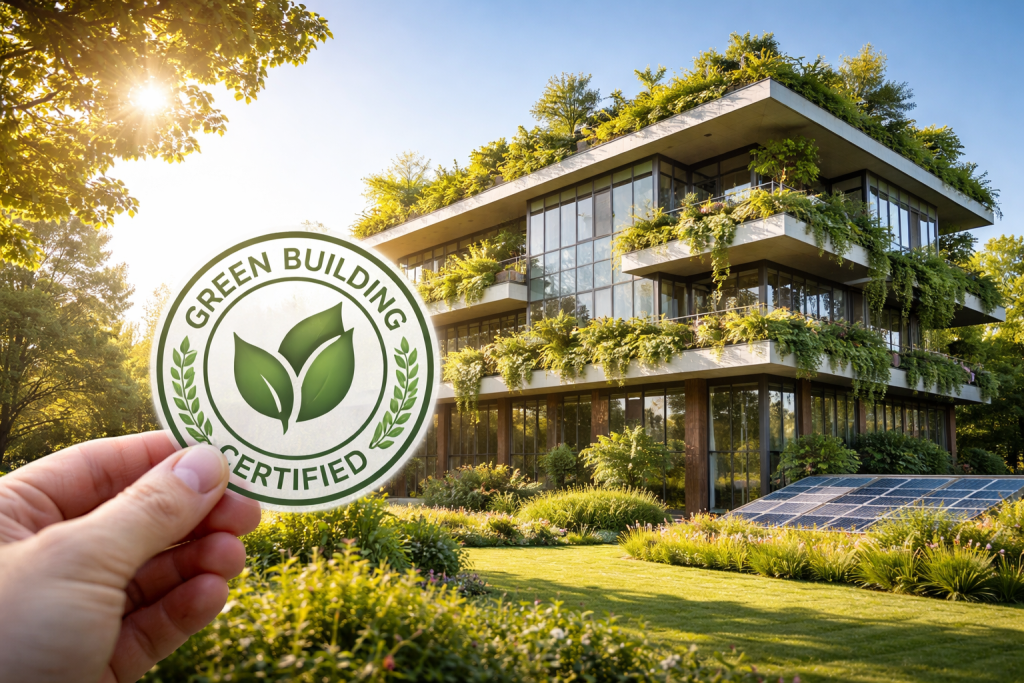
Green building certifications provide measurable benchmarks for energy efficiency, water conservation, indoor air quality, materials sourcing, and overall environmental performance. According to the United Nations Environment Programme, buildings account for a substantial portion of global energy consumption and greenhouse gas emissions. Meanwhile, the International Energy Agency emphasizes that improving building efficiency is critical to achieving climate goals.
Green building certifications gaining popularity signals growing demand for accountability and transparency in construction. Developers increasingly view certifications as both an environmental responsibility and a competitive advantage. This article explores why certifications are expanding, the most recognized programs worldwide, economic and environmental benefits, and what the future holds for sustainable construction standards.
Why Green Building Certifications Gaining Popularity Matters
Buildings influence environmental outcomes at every stage-from construction materials to daily operations. As cities expand and infrastructure ages, sustainable design becomes essential.
Green building certifications gaining popularity matters because they:
- Reduce operational energy use
- Lower long-term utility costs
- Improve indoor environmental quality
- Attract sustainability-focused investors
- Enhance property value
According to the World Green Building Council, green-certified buildings often demonstrate improved asset performance compared to conventional structures.
Certification provides third-party validation, increasing trust among buyers and tenants.
Leading Global Certification Programs
Several widely recognized certification systems shape the green building landscape.
LEED Certification
Developed by the U.S. Green Building Council, LEED (Leadership in Energy and Environmental Design) is among the most globally recognized sustainability certifications.
LEED evaluates categories such as:
- Energy efficiency
- Water use
- Materials and resources
- Indoor environmental quality
- Sustainable site development
LEED-certified projects range from residential homes to commercial skyscrapers.
BREEAM
The Building Research Establishment developed BREEAM (Building Research Establishment Environmental Assessment Method), widely used in Europe.
BREEAM focuses on:
- Environmental impact
- Resource efficiency
- Management practices
- Pollution reduction
WELL Building Standard
The International WELL Building Institute emphasizes occupant health and wellness.
WELL addresses:
- Air quality
- Lighting
- Thermal comfort
- Mental well-being
Green building certifications gaining popularity often intersect with occupant health considerations.
Economic Incentives Driving Adoption
While environmental awareness motivates some developers, economic incentives also play a critical role.
Financial drivers include:
- Lower energy bills
- Reduced water consumption costs
- Government tax incentives
- Higher rental rates
- Increased occupancy levels
Research from the McKinsey & Company suggests that sustainable buildings can command premium valuations in certain markets.
Green building certifications gaining popularity reflects both environmental and financial considerations.
Investor and Tenant Demand
Environmental, Social, and Governance (ESG) standards increasingly influence investment decisions.
Institutional investors often require:
- Transparent sustainability reporting
- Verified environmental performance
- Reduced carbon footprints
Tenants also prefer energy-efficient buildings that align with corporate sustainability goals.
This demand reinforces the value of certification.
Energy Efficiency and Carbon Reduction
Energy use is central to sustainability performance. Certified buildings typically integrate:
- High-performance insulation
- Energy-efficient HVAC systems
- LED lighting
- Smart energy monitoring systems
- Renewable energy integration
The International Renewable Energy Agency highlights renewable integration as essential for decarbonization.
Green building certifications gaining popularity supports climate mitigation strategies.
Water Conservation and Resource Management
Water scarcity is a growing global concern.
Certification standards encourage:
- Low-flow fixtures
- Rainwater harvesting
- Greywater recycling
- Drought-resistant landscaping
Efficient water systems reduce operational costs while supporting environmental resilience.
Indoor Environmental Quality and Health
Indoor air quality affects occupant health and productivity.
Green certifications promote:
- Non-toxic materials
- Enhanced ventilation
- Natural lighting access
- Acoustic comfort
Studies referenced by the Harvard University indicate that improved indoor air quality can enhance cognitive performance.
Health-focused standards contribute to workplace and residential well-being.
Regulatory Influence and Policy Alignment
Governments increasingly incorporate green building principles into policy frameworks.
Examples include:
- Building code updates
- Emissions reporting requirements
- Net-zero mandates
- Incentive programs for retrofits
Green building certifications gaining popularity often align with regulatory compliance goals.
Retrofitting Existing Buildings
While new construction attracts attention, retrofitting older structures represents significant opportunity.
Retrofit strategies include:
- Upgrading insulation
- Installing smart meters
- Replacing outdated HVAC systems
- Enhancing window efficiency
Certification programs now offer pathways for existing buildings to achieve sustainability benchmarks.
Technology and Digital Monitoring
Smart building technologies support ongoing performance tracking.
Systems may include:
- Energy dashboards
- Automated climate controls
- Occupancy sensors
- Predictive maintenance analytics
Digital tools improve transparency and operational efficiency.
Challenges and Barriers
Despite growth, barriers remain:
- Upfront certification costs
- Documentation complexity
- Limited expertise in some regions
- Perceived administrative burden
However, long-term operational savings often offset initial investment.
Global Expansion and Market Growth
Emerging markets are increasingly adopting certification frameworks.
Rapid urbanization in developing regions amplifies demand for sustainable standards.
Green building certifications gaining popularity reflects global recognition of environmental accountability.
Future Trends in Certification
Looking ahead, several trends may shape continued expansion:
- Integration of carbon-neutral metrics
- Expanded focus on circular economy principles
- Digital certification tracking platforms
- Greater emphasis on social sustainability
- Increased retrofitting incentives
Sustainability standards will likely become more comprehensive and performance-driven.
Conclusion
Green building certifications gaining popularity represents a significant evolution in how the built environment is measured and valued. By establishing transparent benchmarks for energy efficiency, water conservation, and occupant health, certification systems promote accountability and long-term resilience.
Economic incentives, investor demand, regulatory alignment, and climate urgency are driving adoption across residential, commercial, and institutional sectors. While challenges remain, advancements in technology and policy support continue to accelerate sustainable construction practices.
As global cities expand and environmental pressures intensify, green building certifications gaining popularity will likely become standard expectations rather than competitive differentiators. Sustainable design is no longer optional-it is central to the future of responsible development.
References
United Nations Environment Programme – Buildings and Climate: https://www.unep.org
International Energy Agency – Buildings Sector Analysis: https://www.iea.org
World Green Building Council – Global Reports: https://worldgbc.org
U.S. Green Building Council – LEED Information: https://www.usgbc.org
Building Research Establishment – BREEAM Overview: https://www.breeam.com
International WELL Building Institute – WELL Standard: https://www.wellcertified.com
International Renewable Energy Agency – Renewable Integration Reports: https://www.irena.org
McKinsey & Company – Sustainable Real Estate Insights: https://www.mckinsey.com