
Modern tourism often appears driven by apps, algorithms, and fast-changing trends. Yet beneath the surface, many of today’s most popular travel experiences are rooted in long-standing cultural practices. From seasonal journeys to communal rituals, travel traditions influencing modern tourism continue to shape where people go, how they travel, and what they seek from the experience.
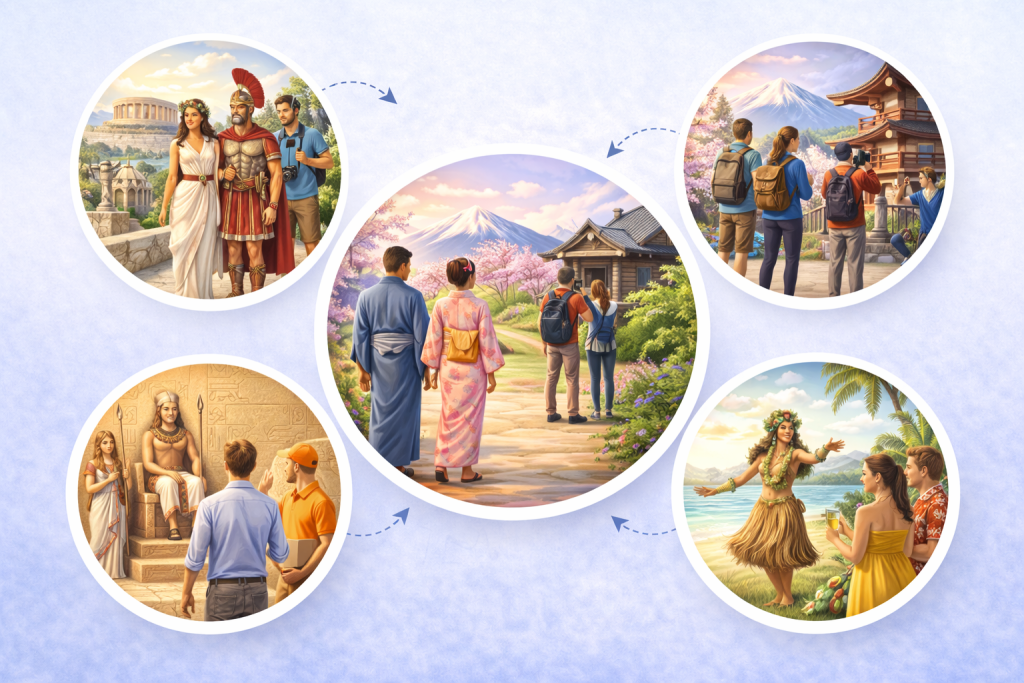
Rather than fading away, traditional travel behaviors are being reinterpreted for contemporary lifestyles. Travelers are no longer satisfied with generic sightseeing. They want meaning, continuity, and a sense of participation in something larger than a checklist of attractions.
Why Traditional Travel Practices Still Matter
Travel traditions emerged long before modern infrastructure. Pilgrimages, trade routes, seasonal migrations, and ceremonial journeys were often tied to social, spiritual, or environmental rhythms. These practices established patterns of movement that still influence tourism today.
Several reasons explain their continued relevance:
- They offer built-in narratives and purpose
- They connect travel to identity and belonging
- They emphasize experience over consumption
As travelers search for authenticity, traditions provide a framework that feels grounded and intentional.
Travel Traditions Influencing Modern Tourism Through Pilgrimage Routes
Pilgrimage is one of the oldest forms of travel, and its influence remains strong. While originally religious in nature, many pilgrimage routes now attract travelers for cultural, historical, or personal reasons.
Examples of modern pilgrimage-inspired travel include:
- Long-distance walking routes
- Multi-day journeys centered on reflection
- Community-based accommodations along defined paths
Routes such as the Camino de Santiago have seen growing participation from travelers who identify as cultural or personal pilgrims rather than religious ones.
According to the UN World Tourism Organization, pilgrimage tourism has expanded into a broader category of spiritual and cultural travel
https://www.unwto.org/tourism-and-culture
Seasonal Travel Traditions and Modern Tourism Patterns
Seasonal movement has always shaped travel. Agricultural cycles, climate patterns, and festivals historically dictated when and where people traveled. These rhythms still influence modern tourism flows.
Contemporary examples include:
- Summer coastal travel rooted in historical trade and fishing cycles
- Winter mountain travel linked to traditional alpine livelihoods
- Harvest-season tourism tied to regional food production
Rather than disappearing, these traditions have been formalized into tourism seasons, festivals, and local events.
Travel researchers note that seasonal travel helps distribute tourism demand more evenly across the year, supporting sustainability.
Communal Festivals as Travel Anchors
Festivals are among the most visible ways travel traditions influence modern tourism. Originally created to mark religious, agricultural, or historical milestones, festivals now attract global audiences.
Key characteristics of festival-based travel include:
- Fixed dates that create urgency
- Strong local participation
- Deep cultural symbolism
Events such as regional carnivals, lantern festivals, or harvest celebrations encourage travelers to plan trips around shared experiences rather than individual attractions.
The UNESCO recognizes festivals as part of intangible cultural heritage, emphasizing their role in preserving traditions while supporting tourism
https://ich.unesco.org/en/lists
Hospitality Traditions and Their Modern Impact
Hospitality customs strongly influence how destinations are experienced. Many cultures have long-standing traditions around welcoming guests, sharing meals, and offering shelter.
These traditions continue to shape tourism in areas such as:
- Home stays and family-run guesthouses
- Food-centered travel experiences
- Slow travel and extended stays
Modern travelers increasingly value these interactions because they provide context and connection rather than transactional service.
Research from the World Travel & Tourism Council shows that experiential travel, often rooted in local hospitality traditions, is a major driver of tourism growth
https://wttc.org/research
Food Traditions as Travel Motivators
Food has become one of the most influential elements of travel decision-making. Culinary traditions, once reserved for local communities, now attract visitors seeking cultural understanding through taste.
Food-based travel traditions include:
- Regional cooking methods passed down through generations
- Seasonal dishes tied to local harvests
- Shared meals as social rituals
Rather than fine dining alone, travelers increasingly seek everyday food experiences that reflect how locals eat and gather.
Culinary tourism is now recognized as a key component of cultural travel strategies worldwide.
Travel Traditions Influencing Modern Tourism Through Slow Travel
Slow travel is often described as a modern movement, but its principles are deeply traditional. Historically, journeys were long, immersive, and relational.
Modern slow travel emphasizes:
- Fewer destinations with longer stays
- Travel by train, foot, or regional transport
- Engagement with local routines
This approach mirrors historical travel patterns where movement was integrated into daily life rather than optimized for speed.
According to analysis by the Booking.com, travelers increasingly prioritize meaningful experiences over packed itineraries
Ritualized Journeys and Life Transitions
Certain travel traditions are tied to life stages. Coming-of-age journeys, educational travel, and retirement trips have long been used to mark transitions.
Modern equivalents include:
- Gap years and extended travel periods
- Wellness retreats tied to personal milestones
- Heritage travel reconnecting people with ancestral roots
These journeys reflect continuity between past and present, showing how travel remains a tool for reflection and transformation.
Sustainability and the Return to Traditional Travel Values
As concerns about over-tourism grow, many destinations are looking to traditional travel practices for guidance. Historically, travel was slower, localized, and community-centered.
Traditional values supporting sustainability include:
- Respect for local resources
- Seasonal movement rather than constant demand
- Community-based economic benefits
Organizations such as the World Wildlife Fund highlight that culturally rooted tourism often aligns better with environmental and social sustainability goals
https://www.worldwildlife.org/initiatives/sustainable-tourism
Why These Traditions Are Gaining New Relevance
The renewed interest in travel traditions influencing modern tourism reflects a broader desire for depth over speed. Travelers want experiences that feel connected to history, place, and people.
Digital tools may shape how trips are booked, but traditions shape why people travel in the first place. They offer continuity in a rapidly changing world.
Conclusion
Modern tourism is not abandoning tradition. It is rediscovering it. Pilgrimages, seasonal travel, festivals, hospitality customs, and slow journeys continue to influence how people move and what they value in travel. By drawing from established traditions, modern tourism gains resilience, authenticity, and meaning. As travel continues to evolve, these traditions will remain essential guides rather than outdated relics.
Sources
- UN World Tourism Organization – Tourism and culture
https://www.unwto.org/tourism-and-culture - UNESCO – Intangible cultural heritage and festivals
https://ich.unesco.org/en/lists - World Travel & Tourism Council – Experiential travel insights
https://wttc.org/research - Booking.com – Future travel behavior trends
https://www.booking.com/articles/future-of-travel.html - World Wildlife Fund – Sustainable tourism initiatives
https://www.worldwildlife.org/initiatives/sustainable-tourism